
Broken Window Is No Silver Bullet For Delhi Police: Golcha Must Look Ajay Raj Sharma's Playbook
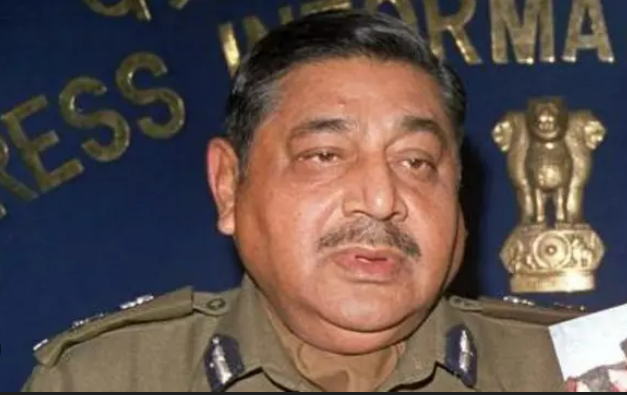
Delhi Police Commissioner Satish Golcha has recently doubled down on one of law enforcement's most enduring frameworks — the Broken Windows Theory — which advocates close attention even to minor and seemingly trivial criminal acts to prevent the escalation of larger crimes. The intent, especially given the capital's increasingly complex security environment, is directionally sound. It signals a commitment to responsiveness and a desire to sharpen the force's pre-emptive capabilities before any tragedy strikes.
However, the larger — and far more critical — question remains largely unanswered: Is the Broken Windows Theory practically viable in today's hyper-evolving security and threat landscape?
"The spirit of Commissioner Golcha is spot on, but whether this will give the problem the attention it truly deserves is a big doubt," a top source in the security establishment said.
The historical record further complicates the picture. Delhi Police Commissioners have periodically championed the broken windows approach. Yet, its tangible impact on crime control in the capital has remained marginal — and the challenge today is significantly more complex than it was then.
The Fault Lines
First Deception Risk: In the current technological and cyber-threat environment, seemingly minor or isolated incidents can be deliberately planted as decoys — engineered distractions designed to divert police attention while a larger, more catastrophic operation unfolds in the shadows. Top sources within the security establishment warn that an excessive focus on micro-level incidents without an overarching intelligence framework can leave forces vulnerable to such deception tactics.
Second: Disapropianate Action and Misreading- A widespread misconception surrounds the Broken Windows Theory — that it is essentially a zero-tolerance doctrine requiring aggressive, punitive action against every minor infraction to instil fear and deter crime. This misinterpretation not only distorts the theory's original intent but can generate disproportionate responses on the ground, alienating communities rather than securing them.
Third: Impact on Community Policing: Aggressive micro-level policing carries a serious risk of institutional bias, where police on the ground overreach their mandate, selectively targeting individuals, and the misapplication of punitive force and bias-driven over-policing risk pushing communities away from cooperative engagement, ultimately undermining the foundation of community policing
The Misconceived Casuality?
The first misconceived notion is that broken windows are a silver bullet for the Delhi Police, the assumption that microscopic attention to small cases will automatically unlock larger criminal or terror networks. While micro-level observations can be useful for identifying within clusters, they are far from sufficient as a national security strategy.
Top sources in MHA said the broken window approach can, at best, enhance post-emergency work. In today's environment — where vast amounts of intelligence clutter must first be filtered, contextualised, and analysed before action — its pre-emptive value is limited.
Revisit Ajay Raj Sharma Policing
The answer, experts argue, may lie in recalibrating the legacy of one of Delhi's most effective Police Commissioners. Former Commissioner Ajay Raj Sharma — notably among the first IPS officers from an outsider UT cadre to lead the Delhi Police — built a reputation for hawkish, intelligence-guided, ground-dominant policing—first, by integrating intelligence-led decision-making with proactive, street-level operational dominance. Seco focused on dominating the situation and environment, not just monitoring individuals. Third, instilled a culture of situational awareness that made anti-social elements reactive, not proactive.
"Sharma's approach must now be recalibrated and deployed in Delhi's current context. Going by the book and relying on a single theory will deliver limited, and sometimes counter-productive, results — the global policing landscape is gradually shifting away from traditional models," a top source said.
Global best practices — from European urban security models to Israeli counter-terror frameworks — are increasingly converging on a more sophisticated paradigm: Intelligence-Led, Place-Based Policing. The focus is no longer on dominating the individual. It is about dominating the environment.
The place-based policing approach
Firsts Hot-Spot Identification and Target Hardening -Identify high-risk physical environments — specific transit hubs, markets, border zones — and deploy physical barriers, reinforced patrols, and environmental redesign to eliminate the breeding conditions for crime and terror.
Second Community Intelligence and Trust Building- Build genuine warmth and engagement with local communities to convert them into active, voluntary partners in the intelligence chain.
Third Predictive AI and Surveillance Integration- Harness AI-powered tools and advanced surveillance into a network-centric crime and terror mapping system — moving from case-centric reactive responses to predictive, pattern-based pre-emption.
Fourth- Environmental Design Fixes- Eliminate dark spots on streets, improve lighting, and make targeted infrastructure improvements. Small, low-cost environmental adjustments can create outsized differences.
The evidence is clear that US Dallas Place-based policing led to a drop of over 50 per cent in crime rates, and Israel police, which is currently reeling under intense security threats, managed to reduce terror strike lethality rates to around 50 per cent. They represent transformational shifts in public security outcomes, achieved not by deploying more force indiscriminately, but by deploying it more intelligently, in the right places.
Delhi Police must fundamentally recalibrate its strategic posture. The broken window instinct — paying attention to the small — is valuable, but it must be embedded within a far larger, more sophisticated architecture.