Climb High, Hold Less: IAS Officers Revisit Power Games As Senior IAS Was Asked To Leave Privileges At Door?
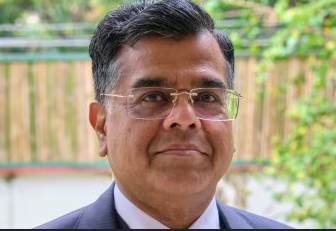
When an IAS officer is shortlisted for a position at the apex echelon of India's power centre, the process doesn't begin with a notification. It begins with a quiet conversation — one that arrives before any official order is issued.
In that conversation, the message is unambiguous: a top official at the power centre told a senior IAS officer who was to be appointed to a senior position at the power centre, "Leave your privileges at the door". This event happened when an IAS officer was called to the power centre before the official notification of his appointment, a top source said.
Sources close to the matter reveal that the officer was explicitly directed to disengage from the bureaucratic luxuries that often IAS officers are grown accustomed to — the positional Power exercised freely across ministries, the discretionary favours, the informal nods that make things move. From that moment onward, nothing moves without approval — not in principle, not in practice, and certainly not without a paper trail. Even travel — official or personal — demands strict prior sanction, stripped of any ceremonial pomp or displays of Power.
A Stark Difference From Every Other Post
For most of their careers, IAS officers operate within a system that quietly rewards positional Power. They enjoy a certain latitude — room to manage power dynamics with discretion, to build professional and personal networks organically, and to exercise judgment with relative freedom. "It is, in many ways, the unwritten perk of the bureaucratic ladder", a top source said.
But at the top helm, that latitude vanishes. A fundamentally different philosophy governs the apex environment: strategic, need-based communication, along with tight operational secrecy and institutional transparency. Top sources say "this strict bureaucratic environment at the highest levels is not punitive — it is protective. It ensures secrecy, maintains transparency, and prevents any undesirable situation or communication from taking root."
IAS officers Revisit Power
A question now quietly reverberating through India's power corridors: Is inherent Power ultimately more effective than positional power at the top command?
Positional Power comes with a title, a designation, and a chair. It is visible and institutional, but the price is high, and we see it in terms of heavy regulation at the apex level. Inherent Power, on the other hand, is quieter. It flows from credibility, expertise, and trust — built over a decade —, but the real power game lies in positional Power, and, more importantly, only those IAS officers are selected, restrained — and ultimately, trusted. The final question is whether IAS officers are ready to pay the price that comes with rising in the power ladder or remain comfortable in their own power game?