Exclusive: Burned Slow Through Trial By Fire: Satish Golcha Stood Tall To Give UT Cadre Its Turf Back
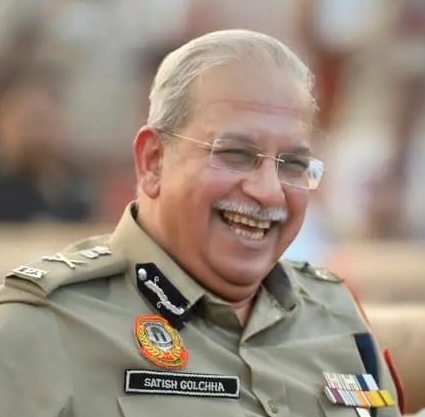
Next month, Delhi Police Commissioner Satish Golcha completes one year in office, and while anniversaries come and go, this one carries a weight that goes far beyond a calendar milestone. Golcha isn't just completing a tenure. He's closing the chapter on a six-year crisis of confidence, one that had quietly but decisively sidelined UT cadre IPS officers from the city's top policing job.
The last full-fledged UT cadre Police Commissioner before Golcha was Amulya Patnaik. Six years passed between them. Within the Ministry of Home Affairs, there existed what insiders now describe as an invisible trust deficit with UT-cadre IPS officers. Coordination breakdowns between Delhi Police Commissioners and the MHA had become almost routine, and the frustration at the top eventually translated into a quiet but deliberate policy shift, a top source said.
The Outside Experiments
The outside cadre experiment, beginning with the surprising departure of Balaji Srivastava, became MHA's preferred alternative. It had limited success. But even as recently as 2022, when a UT cadre comeback seemed imminent, whispers suggested it would be yet another outsider move in disguise. According to top sources within MHA, Golcha's name had been under consideration for weeks. But the final decision wasn't without drama a sudden last-minute change rattled nerves, and the old fears about UT cadre Commissioners resurfaced almost immediately. Yet Golcha's name remained intact for consideration, top sources said.
The Headwinds
"What kept Golcha's name intact was his ability to balance and ponder on situations reading the room instead of jumping on guns in complete power madness," a top MHA source said. That single distinction, sources say, is what finally cleared the decks, ending a six-year drought and restoring a UT cadre officer to the Commissioner's chair in full standing.
If Golcha's appointment was a statement of intent, his first days in office were a test of survival. Crises converged from multiple directions almost simultaneously. The attempted toppling by two CAPF DGs who were eyeing the Delhi Police Commissioner's post set off a wave of speculation, and whispers about counting Golcha's days began circulating even within Delhi Police Headquarters, a top source said.
More dangerously, a cluster of senior officers, what insiders call the "Special CP Club," had quietly positioned themselves to manage the wheels of Delhi Police HQ, keeping the new Commissioner in the dark and betting that he could be neutralised from within, a top source said. "The headwinds that Golcha faced gave us a deep breath," a top source reflected. "His arsenal was surprisingly underestimated."
The Robert Mark Parallel: Flipping the Script
Golcha's situation finds a striking parallel in one of policing history's most celebrated turnarounds, that of London Metropolitan Police Commissioner Robert Mark, who took over at a turbulent time, surrounded by deep-seated corruption and groupism among senior officers who believed they could outlast him.
Mark didn't fight them head-on. Instead, he built public trust as his primary weapon, pioneering open relationships with the press, explaining policing challenges directly to Londoners, restructuring units, and surgically bypassing the de facto power brokers within Scotland Yard. What looked like survival was, in hindsight, a masterclass in strategic manoeuvring. Golcha read from a similar playbook. Within a year, Golcha too flipped the script by bringing some serious structural reforms in policing, specifically making the guidelines for transfer postings stricter and more transparent, with operational changes at the counter-terror and community policing levels.
To manage "Special CP Club", Golcha adopted a balancing approach with striking at the right time; he struck the chords at the right time and ensured swift reshuffling at senior levels to weaken Special CP Club or at least temporarily destabilise it, top sources said. "Golcha brought back the trust and coordination that existed six years back," a senior MHA source said.
Stand Tall
When Golcha stood at the Police Commissionerate Parade yesterday, the symbolism wasn't lost on those watching closely; his year in office is significant not just for what he personally achieved, but for what it potentially signals for the future. He didn't just hold the seat — he actively worked to restore the credibility of the UT cadre IPS in a role it had been effectively locked out of for six years. Whether that restoration holds — and whether future UT cadre officers can build on what Golcha has rese remains to be seen. But as he heads into his final month before tenure completion, one thing is clear: the man who ended it made sure he earned every day of it.