
Exclusive: Delhi Police Commissioner Anurag's Fading Security Common Sense Led to Embarrassment at BRICS?
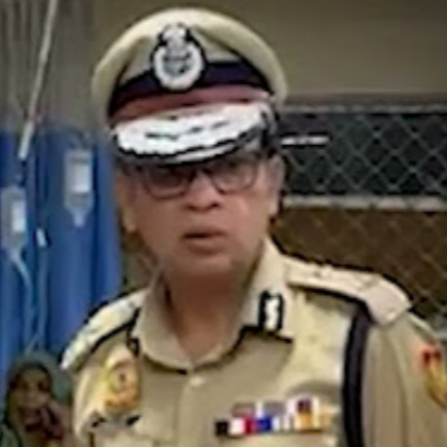
For a Delhi Police Commissioner who almost a month ago issued a ten-point directive on security, chaired his own interstate coordination meetings, and personally signed off on security protocols for one of India's biggest diplomatic showcases, Commissioner Anurag Kumar's Delhi Police delivered something far less impressive than the paperwork promised. Barely a kilometer from Bharat Mandapam, inside a chokepoint, any competent VVIP security drill would have flagged it in its sleep. Tibetan activists climbed poles, unfurled anti-Xi banners, got their photographs clicked and circulated, and only then were "detained." That sequence isn't the security language; it's damage control mistaken for prevention.
The gravity of the situation may not be fully understood by Delhi Police, as they appear to lack security common sense and awareness, but these symbolic acts carry high significance in this security and strategic environment, especially from the Chinese security establishment's side, a top source said.
A top source in the intelligence establishment says that letting such incidents happen in such high-profile events, targeting the Chinese president, has silent aftereffects that should have been pre-emptively foiled, as it gives wrong signals.
"The Indo-China relationship is going through a thawing process where strategic normalization is a key priority, and significant progress has also been made, especially against the backdrop of BRICS." Letting a stir up of sensitive issues due to security mismanagement reflects embarrassment," a top source in the intelligence establishment.
The Security Fiasco
Another top sources in the security establishment said the Intelligence Bureau had alerted the Delhi Police, but despite this, the blunder still occurred. The security questions are real. First, why did Delhi Police not take pre-emptive action to foil any protests before they were activated on the streets and drew attention?
Second: The detention action is a poor and illogical defense and explanation; as such, preemptive measures are meaningless in such large-scale events. A top source in the intelligence establishment said
Failing to secure, or even monitor, an underpass literally on the summit's doorstep is the opposite of proactive,reactive, post-facto containment dressed up as a security win. Detaining three young activists after they'd already climbed poles and gotten their banners photographed and circulated is not prevention; the "success" for the protesters happens the moment the image exists, not when they're arrested.
Third: Another top source added that this appears to be a tactical breach. How can these protesters get so close to the meeting venue, and that too during arrival preparations? Top source said that attempting to tamper with and remove posters with slogans against the Chinese President targeting specifically is a serious breach.
An underpass near the summit's arrival route is textbook vulnerable terrain: elevated structures, limited sightlines, easy to scale, hard to fully seal without visible extra manpower. That it wasn't identified and neutralized as a choke point in advance, despite intelligence inputs reportedly already flagging it.
The Fading Common Sense
The so-called Intelligence directive issued last month with ten pointers has fallen flat, a top source said. Top sources add that half of the pointers are already covered by IB; the remaining are purely executionary, but here, despite being from IB, Anurag was unable to moniter and ensure the execution of a simple Intelligence action in coordination with IB. Sources describing this as a case of the top brass being "operational on paper only" land with more bite than they would for any other CP: the expertise to have foreseen this was, on paper, already sitting in the chair. The problem, according to top sources, is twofold. First, security common sense; second, compartmentalization of command; then, a naivety of Special CPs of Law and Order.
The severe operational naivety of Special CPs, and, in this situation, the commissioner himself, is evident,as in such situations Delhi Police Commissioners themselves review and issue fresh operational instructions, but Anurag, who appears to be operational in name only, did the job on paper, which has caused serious security embarrassment. None of this required extraordinary tradecraft to prevent just basic threat-mapping of soft points along VIP routes, something routine, almost a similar arrangement that took place during the G-20.
For a force whose leadership had, on paper, already absorbed the IB's directives, sources say the gap wasn't intelligence;it was execution and imagination: an inability among senior operational leadership to read this as a specialized security contingency rather than routine law-and-order policing. That distinction, they argue, is exactly what separates anticipatory security from post-facto damage control. Whether this translates into any formal reckoning remains to be seen.