
Exclusive: How DG GP Singh Broke Decades of Inertia, Moved CRPF's Women From Support to Command
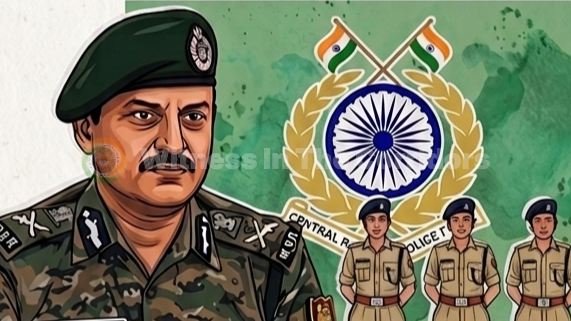
On September 25, the campus of the 88th Battalion in Delhi will host something far bigger than a routine parade it will mark 40 years since India quietly made history. When the CRPF raised the 88th Mahila Battalion on February 6, 1986, it wasn't just adding a unit to its roster; it was creating what is widely regarded as the world's first all-women combat battalion. Four decades later, that experiment has evolved into a full-fledged institution: CRPF now runs six dedicated Mahila Battalions, with more than 10,000 women personnel serving across its ranks, including inside the elite jungle-warfare CoBRA units and the anti-riot Rapid Action Force.
Baptism by Fire on the Battlefields of Sri Lanka
The 88th Battalion didn't get a gentle induction. Barely two years after its raising, its women were deployed with the Indian Peace Keeping Force (IPKF) in Sri Lanka a brutal, high-stress theatre of guerrilla warfare. It was here that Lance Naik Rajwanti Devi earned the Army Chief's commendation for her role at the fiercely contested Elephant Pass checkpoint in 1988.
Making UN Peacekeeping History in Liberia
If Sri Lanka proved their combat readiness, Liberia proved its global relevance. In 2007, a 105-member all-female Formed Police Unit drawn from the CRPF deployed to the UN Mission in Liberia (UNMIL) the first all-women police unit in the history of UN peacekeeping. They didn't just hold the line during routine policing; they stayed the course through the horror of the West African Ebola outbreak and volatile militia transitions, doing humanitarian and law-and-order duty simultaneously.
When they finally departed after nine rotations in 2016, the send-off wasn't a formality;it came with a standing ovation from the UN Secretary-General and Liberian President Ellen Johnson Sirleaf, who called them role models of discipline and valor.
A Change in Command Philosophy
For years, insiders say, the approach to Mahila Battalions by successive DGs has been incremental: more numbers, the same bureaucratic scaffolding. DG GP Singh has flipped that script. Rather than treating expansion as an end in itself.
Top sources said that former DGs looked at the Mahila Battalions through the lens of gradual expansion (adding numbers, but maintaining the standard bureaucratic status quo), but the incumbent DG GP Singh approached them through the lens of immediate empowerment, giving them unprecedented top-level legal backing, dedicating the force’s main celebratory resources to their specific campus, and personally clearing their backlogged welfare grievances.This led to significant structural and operational improvements, a top source said.
Embedding Women as Combat Structure,
The most consequential shift under GP Singh is structural: women's teams are no longer optional add-ons to RAF units; they are mandated, permanently embedded combat components. Official figures confirm the scale of this integration: 64 women's teams, each with 24 personnel, are now embedded across RAF units nationwide, according to top sources.
The leadership pipeline reflects this seriousness too — women officers currently head sectors as significant as Jammu, CoBRA, RAF, the North East, Rajasthan, and Madhya Pradesh at the IG level. IPS officer Sanjukta Parashar recently became the first woman to lead CoBRA, CRPF's jungle-warfare commando force, while Annie Abraham (IG, RAF) and Seema Dhundia (IG, Bihar sector).
The 2026 Training Mandate
At the 2026 Annual CRPF Training Conference, DG GP Singh went a step further by instituting a mandate to integrate modern tactical technology with traditional combat drills, specifically to close the gap in specialized infrastructure and counter-insurgency training between general-duty and Mahila battalions.
Top sources said “It's a signal that the force sees women personnel not as a separate category needing special handling, but as combatants who deserve the same technological edge as anyone else on the front line”