
Exclusive: MHA's Snub, PHQ in Crisis, and Shadow CPs: Anurag Losing Control Over Force?
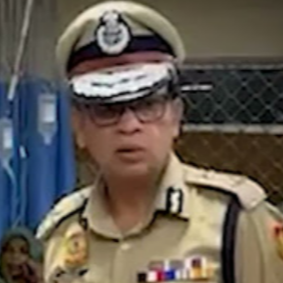
When Anurag Kumar took charge as Delhi's Police Commissioner in July, replacing Satish Golchha in a surprise mid-tenure reshuffle by the Ministry of Home Affairs, his first order of business was optics: a visibility push loosely modeled on the messaging templates of past Commissioners. Nearly ten weeks later, that early emphasis on image looks increasingly at odds with what sources inside the force describe as a widening command vacuum at Police Headquarters (PHQ).
According to top sources within the department, two recent directives one security-related, one administrative were met with what insiders call "cold compliance": technically acknowledged, but never truly enforced down the chain. For a Commissioner still finding his footing, that's a troubling signal.
From a Security Crisis to a PHQ Crisis
The recent horrific and worrisome incidents, specifically the case at Kalkaji, have become the flashpoint. It's one of several recent Delhi-NCR cases that pushed the Supreme Court to take suo motu cognizance and call it "a systemic failure on the part of the police. That single incident in Kalkaji raises three uncomfortable questions for the Commissioner's office: First, visibility gaps persisted despite repeated PHQ reminders on street-level policing. Second, the pink booth network inaugurated with fanfare by Delhi Police's top brass, including Kumar himself, barely a week before near the LSR college/incident spot, failed to translate into action on the ground. Third, no coherent counter-crime strategy existed heading into a period when crimes against women were already trending upward.
Sources argue this isn't a case of an isolated, unpredictable spike in crime; it's the visible symptom of a deeper problem: an over-centralized PHQ where real decision-making has narrowed to just two people. "PHQ affairs have become extremely centralised; limited to one Special CP and Anurag himself," a top source said. "Paperwork moves, but detailed strategic discussion barely happens beyond the surface." Former Commissioners, the source added, used to engage at length with field officers using structured strategic guidance a practice that has "gradually diminished," leaving a widening disconnect between PHQ and the street.
The Familiarisation Period That Wasn't
Convention dictates that every incoming Commissioner revisits standing orders to understand what's already in motion before layering on new policy. Top Sources say Kumar largely skipped that step, instead moving toward consolidating power and influence early, despite having been away from the Delhi Police cadre for nearly two decades before taking over. A 2021 standing order on street lighting appears to have gone unnoticed until Delhi Police launched its own street-lighting project in June this year, essentially rediscovering a directive that already existed. Kumar's own June order on strengthening security coordination with the MCD is, per sources, moving at a sluggish pace. Since August, there has been a visible, gradual rise in crimes against women, yet sources say no preventive measures were rolled out, only reactive ones after incidents made headlines.
"Had Anurag Kumar actually gone through the standing orders," one top source said, "he would have had a much clearer sense of what the capital's police force actually needed." Sources also note that while Kumar has spoken directly to DCPs, these interactions tend to be general directions rather than tight, accountability-driven follow-through.
The Shadow CP Problem
Beyond individual command style, sources point to a structural issue destabilizing PHQ: an unusual over-reliance on "shadow" Special CPs. Every Commissioner works closely with a Special CP that's standard. What's being described as atypical is Kumar reportedly designating select Special CPs to effectively supervise and run PHQ operations on his behalf, rather than exercising direct command himself. "That's not how things work when you're new to the job," a source said, noting that even Commissioners brought in from outside the AGMUT cadre haven't resorted to this kind of shadow arrangement.
The consequence, sources argue, is corrosive: "Shadow CPs dilute the seriousness of the Commissioner's own command. It gives mid-ranking officers room to dodge accountability, and enforcement of orders stays weak. That's the real reason most of Anurag's directives have either fallen flat or bred administrative slackness across PHQ."
Reactive Policing, Reactive Optics
Once the Kalkaji case exploded into public and judicial scrutiny, the response was immediate and, sources say, entirely reactive. Foot and bike patrols surged, marching exercises multiplied. The Supreme Court's own language leaves little room for spin it explicitly rejected "expressions of concern, devoid of accountability" as insufficient, and warned that public spaces cannot be allowed to remain "high-risk zones due to grossly inadequate illumination, poor surveillance, lax patrolling". Sources say frequent media briefings during these patrol rounds only reinforce the sense that this is reactive crisis management rather than the product of any long-term strategy from Kumar or his Special CPs.
MHA's Patience Is Wearing Thin
A sharper Commissioner, sources argue, could have gotten ahead of this on three fronts: pre-empting the rising crime trend, formulating an immediate street-policing strategy once numbers started climbing two months ago, and ensuring shadow Special CPs' "catch-up" efforts translated into substantive work rather than the appearance of it. The stakes go beyond optics .
Top sources said the MHA has already expressed serious displeasure with the current Delhi Police leadership and while it's holding off on immediate action, the option of bringing in a Commissioner from outside the UT cadre, "if it becomes absolutely necessary," is reportedly on the table.That's a significant signal. The MHA has already shown this year that it's willing to move fast and also reflects Anurag Kumar's trust is at tightrope with MHA. Delhi Police has now seen two Commissioners exit within roughly a year. If sources are right about the current mood in MHA, a third change before the new year wouldn't be the shock it might once have seemed.