Exclusive: Papers Work Less, Ground Works More: Delhi Police Commissioner Anurag Needs a Rethink Before BRICS
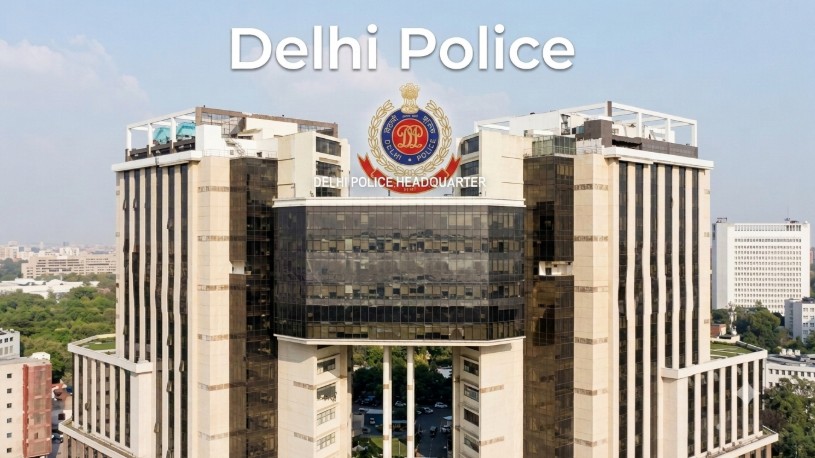
With the 18th BRICS Leaders' Summit set to unfold at Bharat Mandapam on September 12–13, Delhi Police is deep into rehearsals, motorcade drills, and interstate coordination meetings chaired by Commissioner Anurag Kumar. On paper, the machinery looks textbook. On the ground, according to sources within the security establishment, it looks a lot like paperwork pretending to be preparedness.
The G-20 Playbook
"Top sources" describe a security posture that is, in their words, generalist rather than specialized, heavy on command memos, light on street-level command presence. "The security spirit remains generalist, not specialized the way we saw during G-20," a top source in the security establishment said. That's a pointed comparison, because the two events aren't remotely equivalent in scale. G-20 was a summit of far greater intensity and footprint. But scale, top sources argue, shouldn't become an excuse to dial down strategic rigor. BRICS may be a smaller theatre; it is still a high-value one.
The AI Summit Lessons
Sources point to the recent India AI Impact Summit as the cautionary tale. What was billed as a security showcase turned into a case study in coordination failure. Delhi Police recovered the devices within 24 hours and deserves credit for the response,but the incident occurred inside the perimeter, not outside it. Top Sources trace the failure to two recurring weaknesses: First was a paper-first culture, with command decisions flowing as directives rather than as active, adaptive coordination; and second, special CPs anchored to headquarters had a hands-off posture that left gaps precisely where micromanagement is needed most.
The G-20 Contrast
The comparison to G-20 keeps surfacing for a reason. During that summit, sources say, Special CPs and even headquarters leadership were visibly out on the street, present at chokepoints, correcting in real time, rather than issuing instructions from a command room. It wasn't about noise or scale; it was about physical, active oversight replacing procedural box-ticking. That contrast is the crux of the current criticism: the attention required hasn't changed just because the scale has, a top source said.
Fragmentation at the Top
Perhaps the sharper allegation is about internal cohesion. Sources describe coordination among Special CPs as fragmented, with the current leadership architecture leaning heavily on one Special CP's paper-driven style rather than a unified command rhythm. Commissioner Anurag Kumar, months into the chair, is described by sources as a believer in process-and-paper discipline, a philosophy sources argue works only if it's paired with equal weight on ground execution, not instead of it. A rushed command structure with paper instructions and less ground focus is more chaotic, a top sources said.
Top sources also allege a quieter dysfunction inside Police Headquarters: some Special CPs operating in relative isolation, with at least one reportedly resisting moving out of Capital to preserve their position, raising, as one source put it, a "batchmate problem" of seniority optics overriding operational need but still glued to their chairs and doing a paper-tiger job. "This kind of low-key narrowness in unified command is a sad state of affairs," a top source said. Top sources add: There's a sharp closing line in the sources' critique: compartmentalised, need-to-know silence might be an asset for an intelligence agency like the IB, where discretion is the currency. But Delhi Police, sources argue, isn't built that way; its strength has always been the combination of paperwork and visible street command, working in tandem.
None of this diminishes the technical groundwork Delhi Police has publicly shown, but if the sources' account holds, the deeper problem isn't visibility of effort; it's distribution of leadership attention. A command from a headquarters desk can move paper efficiently. It cannot, by itself, read a crowd, correct a lapse in real time, or plug the kind of coordination gap that another fiasco Delhi Police's leadership cannot afford.