
Exclusive: UT Cadre IAS Officer Turned a Hard Posting Into a Delhi Pass?
According to top sources, a striking case has emerged from the corridors of the AGMUT cadre, one that top sources describe as "circumventing orders using MHA's own policy. A UT cadre IAS officer who recently transferred to a hard posting may have executed an arrangement that no one has ever executed.
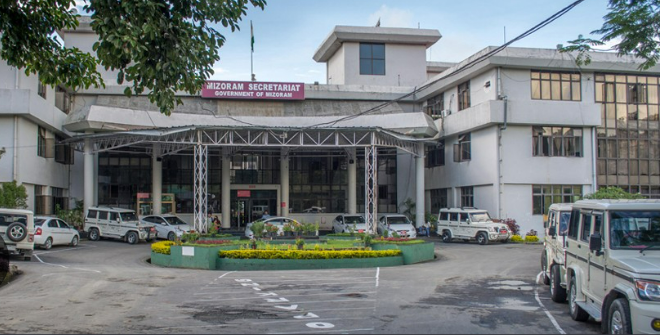
When a Union Territory cadre IAS officer was recently transferred to Mizoram, a designated hard-posting state, it should have marked the beginning of a demanding stint away from the comfort and influence of Delhi. Most officers in such situations either stoically serve their tenure or quietly count the days until they can return. But this officer, sources say, may have done neither. Instead, he appears to have done something far more calculated.
The Order With a Catch
According to top sources, the officer has been appointed as Resident Commissioner, Mizoram House, Delhi, along with additional portfolios. So far, so routine. Resident Commissioners are a familiar fixture of state-Centre relations, but the catch is here: this is where it gets interesting. The transfer order, sources reveal, explicitly states that the officer's headquarters will be in Aizwal.
In standard practice, a Resident Commissioner is based in Delhi, permanently, functionally, and officially. The entire purpose of the role is to maintain a state's presence in the national capital. Aizwal-headquartered Resident Commissioner is, by that logic, a structural anomaly. Sources describe it as rare to the point of being unprecedented.
What it effectively means, however, is elegantly constructed: the officer can function as Resident Commissioner and travel to Delhi for administrative duties as and when the state government requires, but he is not permanently stationed there. This is where the calculation becomes particularly sharp. The MHA's Transfer and Posting Policy for AGMUT cadre officers, under Point 8(5), Sub-clause 3, states clearly:
"An officer functioning as Resident Commissioner and based in Delhi for any administrative duty of the constituent Government would be treated, as if, he is on Delhi posting." The operative phrase is "based in Delhi."
Since this officer's Headquarters is officially Aizwal, not Delhi, any time he spends in Delhi on administrative duty falls into a grey zone. He is functioning as Resident Commissioner. He may be deployed to Delhi for administrative duties. But he is not "based" in Delhi in the manner the policy envisions, top sources said. His Delhi visits may not count as hard posting time. And crucially, top sources allege his hard posting tenure clock may not be ticking as it should, or could be managed entirely at his own discretion. "Circumventing orders using MHA's own policy order, that is thoughtful calculation," a top source remarked drily.
The Deeper Irregularity: A Post That Shouldn't Exist
Beyond the tenure arithmetic lies a more fundamental question, one that sources say cuts to the heart of administrative propriety. There is no officially sanctioned post of an Aizwal-based Resident Commissioner. The position of Resident Commissioner exists specifically because states need a senior officer in Delhi, not sitting in the state capital. The entire institutional logic of the role is anchored to physical presence in the national capital.
On official records, Resident Commissioners have always been deputed to Delhi. Creating an Aizwal-headquartered version of this post, sources argue, is not just unusual. Top sources said, "It raises pointed questions about who approved this arrangement, under what justification, and whether it can withstand scrutiny"
The Bigger Picture
What makes this case noteworthy is not merely one officer's alleged career manoeuvring. It reflects a broader pattern in the AGMUT cadre, where Delhi's gravitational pull is its networks, its influence, its proximity to power. While scores of officers serve their hard posting tenures dutifully some with genuine dedication, others with reluctant compliance the suggestion that a posting order can be structurally engineered to neutralise a hard posting's intent strikes at the foundational principle of cadre discipline.
The MHA's posting policy exists to ensure equity, accountability, and fair distribution. Still, when such an order is issued, it raises a dangerous precedent of arm-twisting policy as the instrument of its own circumvention.