
Exclusive: UT Cadre IPS Officers Who Rule by Phone Call Are Now Paying Price?
The Ministry of Home Affairs has once again moved to close a long-exploited loophole. Through a directive, MHA has made it unambiguously clear that no UT cadre IAS or IPS officer receives pension or retirement benefits until the officer is cleared from a vigilance angle.
On the surface, this looks like routine procedural tightening. "Multiple vigilance and disciplinary proceedings don't make it to the official record due to limited intervention, and that gap becomes a gateway for manipulation," a top source said. The directive is MHA's institutional answer to a problem it has watched fester for years: officers with shady records retiring quietly, benefits in hand, accountability nowhere in sight.
UT Cadre Under Microscope
To understand what's happening, one must first understand what the AGMUT cadre is and what it has become. Top sources describe the UT cadre as "one of the most penalised cadres in India in terms of vigilance actions and forced retirements relative to its cadre size." While large state cadres like Maharashtra and Uttar Pradesh face higher raw numbers of complaints, a proportional analysis tells a starker story:
"If you look at the per capita concentration of strict central punitive actions over the last five years, UT cadre IPS officers come almost on the higher side. The ratio of punitive interventions to cadre size is higher than most state cadres," a top source noted.
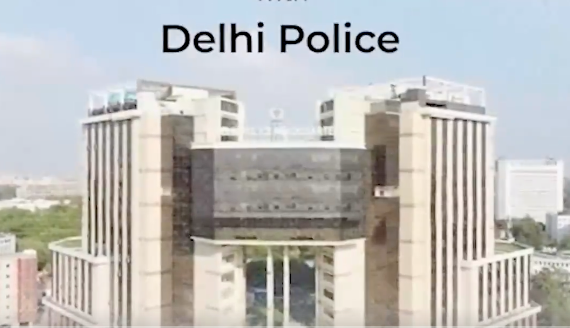
Over the last five years alone, the MHA's disciplinary hammer has swung in nearly every conceivable form, including vigilance inquiries, unceremonious shunting of senior officers, public expressions of displeasure over performance, and, most dramatically, the unprecedented step of parachuting top brass from outside the cadre not once, but twice. That last detail deserves emphasis. Having an outsider hand over the reins of the Delhi Police is not a routine administrative decision. It is a statement that UT cadre IPS officers failed to produce credible leadership from within."
The Core Problem With UT Cadre
The rot in the UT cadre is not accidental. It is structural. Top sources point to three converging fault lines that have pushed the cadre to where it stands today. "Every UT cadre IPS officer wants to retain a Delhi posting at any cost," a senior source said bluntly. This desperation to stay in Delhi at all costs breeds exactly the kind of institutional behaviour that invites MHA's wrath, officers cutting corners, leveraging personal relationships, and compromising on integrity to avoid being transferred out. The fear of losing a Delhi posting has, in many cases, overridden the fear of losing professional credibility.
Power Politics at the Top
Sources describe the Special Commissioner level in Delhi Police as a uniquely dysfunctional zone. It is more difficult to change a Special CP than a Delhi Police Commissioner," one source noted. This entrenchment has consequences. Every Special CP becomes a power centre unto itself, working at cross-purposes with the top brass and, often, with each other. The result is a Police Headquarters in perpetual friction where decisions are shaped less by operational need and more by who can make the right phone call.
Career Stagnation and Operational Insularity
Perhaps the most damning structural problem is what sources describe as "a culture of non-careerism", a deliberate avoidance of broader institutional exposure. A robust IPS career is expected to include stints with Central Paramilitary Forces(CAPF), Central Police Organisations (CPOs), Intelligence agencies, and other national security establishments. These postings build strategic depth, inter-agency understanding, and the kind of operational maturity that modern policing demands.
In the UT cadre, however, a significant cohort of senior officers has spent the overwhelming bulk of their careers within the narrow lanes of Delhi policing, avoiding CAPF postings. In the UT cadre, however, a significant cohort of senior officers has spent the overwhelming bulk of their careers within the narrow lanes of Delhi policing, avoiding CAPF postings, declining deputation to central establishments, and retreating into what sources call "simple policing thinking."
"This makes them operationally inefficient and restricts them to a policing mindset that often contradicts strategic policing reality," a top source said. "The problem runs all the way up to the Police Commissioner level." Top Sources invoke a name that now feels like a benchmark, rather than a memory: K.K. Paul, former Commissioner of Delhi Police, whose career was defined by a rare combination of deep intelligence exposure and firm command over law and order.
"Those were the days when we had Commissioners who had a strong hand in intelligence agencies and in policing alike," a top source recalled. "That combination of institutional depth and operational command is what made the difference." The contrast with the present is uncomfortable. Today, sources in MHA describe a cadre in which the most senior IPS officers posted at Police Headquarters believe they can bend the rules or secure concessions through phone calls.
The Freefall
Behind closed doors, the conversation at MHA is increasingly urgent and increasingly bleak. "After a few years, this cadre will witness a freefall in the seniority scale. Most of them will be DANIPS officers. The remaining IPS officers either lack sound operational knowledge, are facing vigilance inquiries, or carry shady records," a top MHA source said. The institutional math becomes alarming.
The pension vigilance directive is not an isolated order. It is part of a pattern, a deliberate, escalating series of interventions that signal MHA's intent to reset the terms of accountability for the UT cadre and to shunt Special CPs. The external appointments at the Commissioner level. Each intervention, viewed in isolation, can be explained away. Viewed together, they form a coherent picture of an institution at the end of its patience.
Sources indicate that if the cadre's entrenched leadership does not recalibrate, if the phone-call governance culture persists, if operational insularity continues, if vigilance records remain opaque, the Centre is prepared to make hard calls, even at the Police Commissioner level.