
Exclusive: Press Hard, Pay Hard: Why GP Singh's Crackdown Inside CRPF Was Both Justified and Inevitable
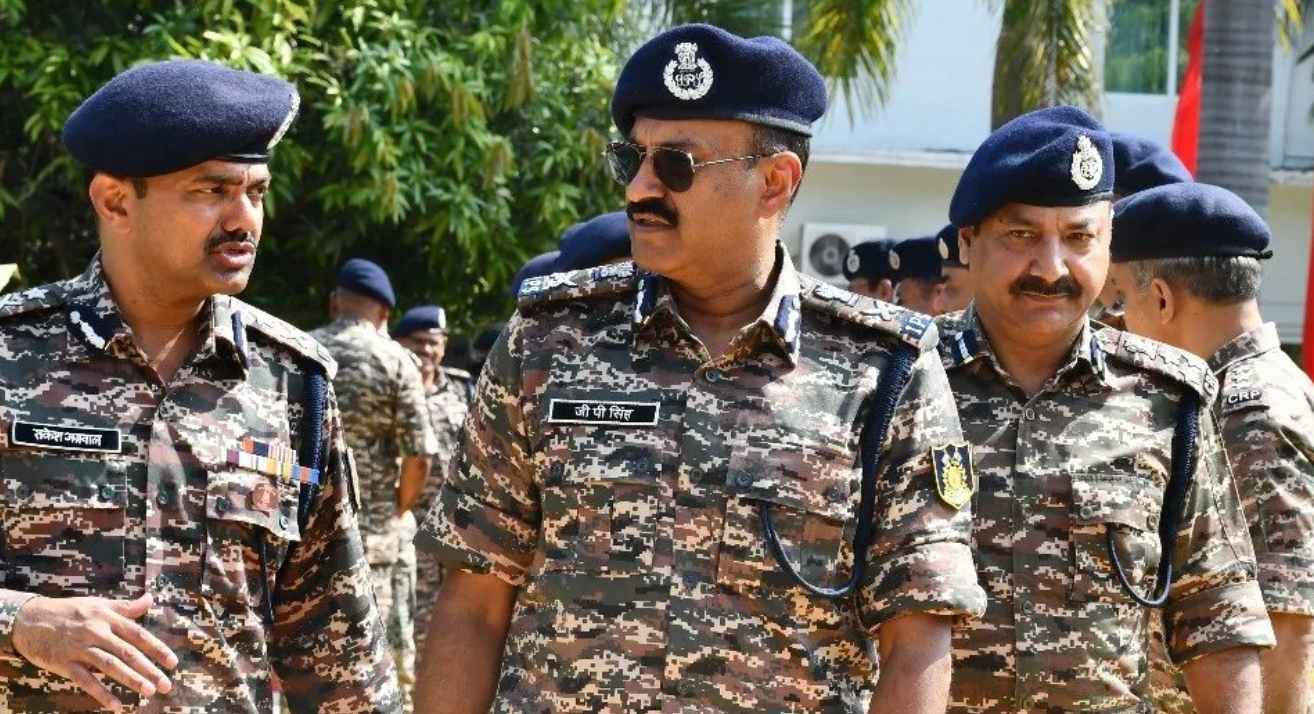
The CAPF (General Administration) Act, 2026, is now the law of the land; the parliament has spoken. The legal chapter is closed. And yet, a section of CAPF cadre officers within the CRPF appears unwilling to turn the page.
Top sources with direct knowledge of the situation say the renewed agitation is not a spontaneous outpouring of genuine frustration; it is increasingly a deliberate, choreographed campaign designed to pressure and destabilise the top brass of the CRPF. "This has stopped being about the CAPF Bill. It has become about targeting the leadership of the force."
The "On-Ground Experience" Argument: Noble Sentiment, Thin Substance
Supporters of the cadre movement frequently invoke their battlefield credentials, counter-insurgency operations, anti-Maoist campaigns, and boots-on-the-ground service. The emotional appeal is understandable. But sources argue the logic collapses under scrutiny.
Tactical excellence is not the same as strategic vision. The CRPF is not merely a fighting unit it is a national security institution requiring officers who can navigate policy corridors, coordinate with state governments, interface with the Ministry of Home Affairs, and exercise command at a systemic level. The "ground experience" argument, however compelling at the unit level, does not automatically translate into the administrative and institutional acumen that senior command demands.
More pointedly, sources note that the grievance itself was heard and adjudicated. The Supreme Court, in its judgment, acknowledged concerns about stagnation. The government responded with statutory clarity through the CAPF Act, 2026. The legal and legislative journey is complete. Continuing to flare the issue after that is not advocacy. It is agitation.
The Flashpoint
The situation crystallised sharply in recent days after the suspension of a DIG-rank officer of the CRPF cadre and the transfer of 20 other CRPF officers. CRPF Director General G.P. Singh was unambiguous:
"All serving and uniformed officers of CRPF are bound by the rules and statutes and the oath taken. Any word — written or spoken — or action contravening the same would be dealt with appropriately in consonance with the law of the land."
The Validity of DG Actions
Those questioning the DG's authority to act would do well to examine the statutory foundation beneath his decisions. It is, in a word, solid. The actions rest on two unshakeable pillars:
1- Necessity: Soft deterrence was tried and failed. Repeated warnings were issued. Officers were categorically reminded not to use the CRPF platform for political or quasi-political activities. The warnings were ignored. Iron-fist enforcement became not a preference but a command compulsion.
2- Statutory Validity: The CRPF operates under the CRPF Act, 1949 and CRPF Rules, 1955, special laws that, by the settled principle, take precedence over general civil service rules for matters they expressly govern, along with the DG's discretionary powers mentioned in the act.
The DG's actions, far from being arbitrary, represent a calibrated, rule-bound, escalatory response to a deteriorating situation that threatened internal cohesion and institutional discipline.
The Sticking Point: Power Play Dressed as Protest
Strip away the rhetoric, and a clearer picture emerges. Sources identify a small but active cohort of CAPF cadre officers within the CRPF who are using the CAPF Bill as convenient political camouflage for what is, at its core, a power-grab operation, an attempt to pressure senior leadership into decisions that serve factional interests rather than institutional ones.
The CRPF is not a debating society. It is not a lobbying forum. It is not a platform for social media activism. It is one of the world's largest armed police forces, responsible for internal security operations across some of the most volatile theatres in the country. The force runs on command, discipline, and unity of purpose. When social media campaigns are orchestrated to delegitimise the office of the Director General, the damage is not just to one individual. It fractures the operational fabric of the institution.
"Had CAPF cadre officers had genuine grievances, the system offered them appropriate channels. They chose public theatre instead. That is no grievance. That is indiscipline. And indiscipline in an armed force is not a minor infraction, top sources said. Officers who continue to weaponise this issue, particularly from within the ranks of a uniformed force, must reckon with a simple truth: The harder the pressure from within, the harder the institutional response will be.