Gurdeep Singh's Decade Stands At Morgan Moment And PMO's Table
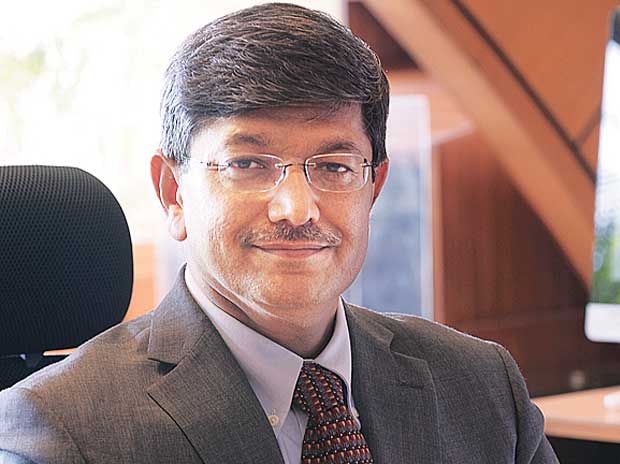
Some leaders manage institutions — and then some reimagine them. As Gurdeep Singh, the longest-serving NTPC Chairman and Managing Director, approaches the twilight of his remarkable tenure, the question isn't merely who succeeds him at India's largest power utility. The deeper question is: where does a transformational architect of this scale go next?
Top sources suggest the answer may lie not in departure, but in elevation. With the PMO expected to see fresh appointments as incumbent tenures conclude, Singh's name is being mentioned alongside an Advisor's role or a seat on the Prime Minister's Economic Advisory Council. This stage fits the canvas he has built.
The Morgan Blueprint
To understand where Singh stands today, one must travel back to Depression-era America — and to a man named Arthur Morgan.
In 1933, with the United States economically paralysed and the Tennessee Valley by poverty, flooding, and institutional inertia, President Franklin D. Roosevelt made an audacious call. He reached out to Morgan — a self-taught civil engineer turned visionary administrator — and appointed him to the chairmanship of the newly created Tennessee Valley Authority (TVA), the largest public power enterprise in American history, spanning seven southeastern states.
The President promised the agency would remain free from partisan pressure and offered his full backing. What Morgan delivered was nothing short of extraordinary — a chain of dams built on time and under budget, planned communities, rural electrification, reforestation programmes, and an integrated regional development strategy that became a global model for multipurpose governance.
India's Morgan Moment
When Gurdeep Singh took charge of NTPC in 2016, the organisation was a structurally and organisationally constrained giant — heavily coal-dependent, inward-looking, and staring at the global tide turning decisively toward clean energy. Much like Morgan, who didn't just build dams but built an idea of what a region could become, Singh didn't just manage power plants — he reconstructed the institutional DNA of India's largest energy enterprise. He rewired its ambitions, its risk appetite, and its sense of national purpose.
Top sources say, perhaps the most audacious dimension of Singh's leadership was his willingness to cannibalise NTPC's own legacy. cannibal sehat had built its entire identity around thermal power, and was now being repositioned as India's foremost renewable energy champion.
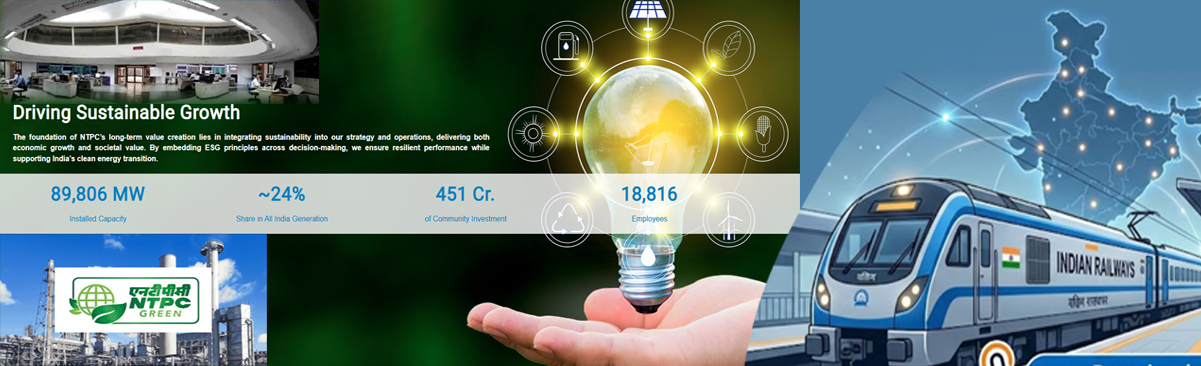
Under his watch, NTPC set an aggressive target of 60 GW of renewable energy capacity by 2032 — a number that would have seemed fantastical a decade ago. At the capital and Economic front, NTPC's capital investment programme has surged to nearly ?5 lakh crore — one of the largest capital formation programmes in the Indian public sector. A few years back, S&P Global Commodity Insights ranked NTPC as the No. 1 Independent Power Producer (IPP) and Energy Trader globally. It has been featured on the TIME World's Best 1000 Companies list for 2025.
Singh brought the same integrated thinking to national energy security. Today, N PC supplies nearly 25% of India's total electricity — a staggering share that makes it not merely a utility, but a sovereign strategic asset. At a time when India faces external headwinds — from supply chain vulnerabilities to geopolitical conflict — having a domestically anchored, technologically diversified, and operationally robust power backbone is not a luxury. It is a national security imperative.
This is the quality that most distinguishes Singh from a generation of competent administrators — the ability to hold two time horizons simultaneously: managing the present with operational discipline while architecting the future with strategic boldness. Gurdeep Singh built India's energy backbone in near-silence, and now he awaits building a new innings in India's energy and infrastructure governance from the top helm of power.