"Hands-Off Command" Is Not Leadership: The Dangerous Nonsense of a Special CP Who Calls Inaction a Decision
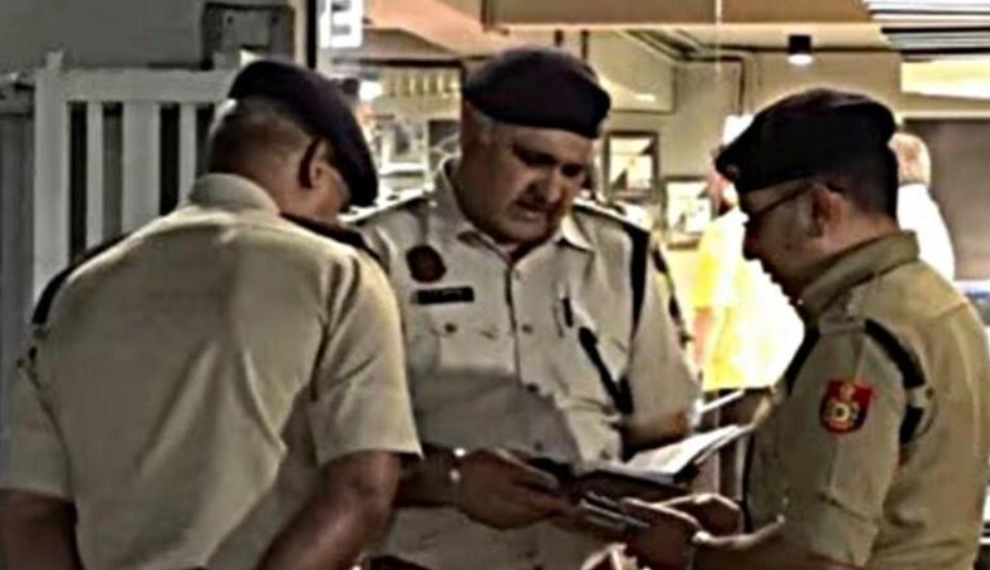
At a recent Jan Sunwai event, a Special Commissioner of Police made a statement that, on the surface, sounded like a firm declaration of impartiality. Addressing police personnel present at the event, he said: "I won't take a stand either way"
At a plain reading, the remark projects the image of a no-nonsense, fair-handed officer, someone unwilling to bend the rules for anyone. It sounds decisive. It sounds principled. But look closer, and the picture begins to unravel.
Because in the dynamically evolving landscape of modern policing, where situations demand real-time judgment, command clarity, and decisive leadership, a blanket declaration of non-alignment isn't a virtue. It is, in fact, a liability dressed up as a principle.
Top sources familiar with the officer's career trajectory suggest the statement was not born of strength, but rather of fear. Fear of controversy. Fear of accountability. And most critically, fear of taking a stand that could disrupt a carefully managed ascent up the hierarchy. "That's not leadership," a top source bluntly put it. "That's deliberate safe play to protect personal interests."
The Hillsborough Warning: When "Hands-Off" Becomes Fatal
History offers a chilling precedent of what happens when leaders confuse neutrality with inaction, and it cost 97 lives—at the 1989 Hillsborough Stadium disaster in South Yorkshire, UK, police commanders overseeing crowd control at a major football match made a catastrophic error in judgment. The match commander, observing a dangerous bottleneck forming outside the turnstiles as thousands of fans surged forward, adopted what he believed was an objective, non-interventionist approach. He chose to let the crowd "filter itself in naturally."
He did not direct. He did not manage. He did not command. When the situation became visibly dangerous, he ordered a large exit gate opened but issued no instructions on where the surging crowd should move. The result was a deadly human crush. 97 people died. 766 were injured. It remains one of the worst disasters in British sporting history, and at its centre was a commander who confused detached observation with responsible neutrality.
The parallel is uncomfortable, but it cannot be ignored. A hands-off philosophy in policing command doesn't produce balance; it produces a vacuum. And vacuums, in security situations, are fatal.
"Administrative Neutrality" The Most Misused Shield in the IPS Playbook
Sources indicate that the Special CP's inclination towards detached inaction is not new. Before his elevation to a top post at the Police Headquarters (PHQ), while occupying a crucial position, he reportedly developed a pattern of framing his inactions as "administrative neutrality." This is where the problem deepens — because administrative neutrality is a real, respected principle. But it is being weaponised here as a cover for something entirely different.
Administrative neutrality means non-partisan action, not detached inaction. It means making decisions without fear, favour, or political colour. It does not mean withdrawing from the decision-making process altogether. An officer who refuses to decide is not neutral. He is absent, and the absence of command in policing is a decision in itself—a dangerous one. "Not deciding on something is also a decision," a top source said. "And many IPS officers who carried this nonsense have been rightly sidelined."
The BSF Warning Shot — A Lesson Already Administered
The top brass, it appears, is not blind to this pattern. Sources point to the ouster of the former Director General of BSF last year as a telling signal — a high-profile lesson directed precisely at this brand of leadership failure. The message from the top was unambiguous: officers who prefer comfort over command will not be shielded by seniority or rank. That lesson, evidently, has not been absorbed by all.
The recent controversies swirling around Delhi Police are believed to have prompted the Special CP's comments at the Jan Sunwai — a careful, calculated positioning of himself as a man above the fray. But those who know his career arc say this isn't a response to the current controversy. It is a pattern, a consistent default to the safest possible posture whenever the professional terrain becomes unpredictable.
The Actual Policing
The current policing landscape — marked by communal sensitivities, social media scrutiny, rapid escalation of on-the-ground situations, and evolving threats — does not reward officers who hover above operational reality with studied detachment.
It demands and rewards officers who are capable of strategic and surgical intervention: those who can read a situation, apply sound judgment, take a defensible position, and own the outcome. Officers who know when to enforce, when to de-escalate, when to hold the line
The Commissioner Question And What Hangs in the Balance
The Special CP in question is expected to enter serious contention for the position of Delhi Police Commissioner in the coming years. And that prospect, sources say, is precisely why this conversation must happen now before the leadership deficit becomes a structural one.
If this pattern of detached, self-preserving leadership is allowed to rise to the top, the consequences extend far beyond one officer's career. The mistrust it breeds within the force — the signal it sends to junior officers about what kind of leadership gets rewarded will corrode the institution from within. And top sources warn that if the top brass calculates rightly that this officer lacks the command temperament for the city's top policing post, the outcome is predictable: Delhi will once again see a Commissioner brought in from outside the cadre.