

How a Top Cop Turned Around Two Discoms
Quote By Author
"Haryana is very different from the states like Uttarakhand and Himachal Pradesh which have abundance of cheap hydroelectricity; hence, the loss making Haryana Discoms needed systematic changes and operational transformation to come out of the red. Towards this end, we implemented a host of initiatives to reform all three core areas in distribution business, namely, Metering, Billing and Collection. The book “Wired for Success” is a compilation of all those best practices, written with the fond hope that distribution utilities in other States will be able to benefit from them”
Review
Wired for Success: How a Top Cop Turned Around Two Discoms tells the story of author Shatrujeet Kapur's leadership in transforming Haryana's power sector as CMD of two power distribution companies. The book explores the intricacies of power, bureaucracy, and leadership, and the challenges Kapur faced along the way. When the then Chief Minister appointed him in late 2016, the companies had combined losses exceeding INR 29,000 crore. By the time he left in 2020-21, his reforms had delivered financial gains of INR 15,966 crore.
Beyond the financial turnaround, the reforms improved power supply reliability, expanded rural electricity access, upgraded the distribution network, and boosted consumer satisfaction. Kapur's leadership focused on rooting out corruption, streamlining processes, and integrating technology and innovation.
When asked why he chose to write a book on the power sector, he said real-life experience is a treasure box. It lets people learn from real scenarios and address problems at their core.
He explained that distribution is the real challenge. Discoms lacked adequate understanding of it, even at the senior and entry levels. This capacity gap made it hard to implement and operationalize best practices, resulting in heavy losses for the state.
Kapur's approach offers a blueprint for tackling systemic challenges and driving lasting improvement, in the power sector and beyond. It also serves as a guide to effective leadership and navigating complex systems.
Dear Readers,
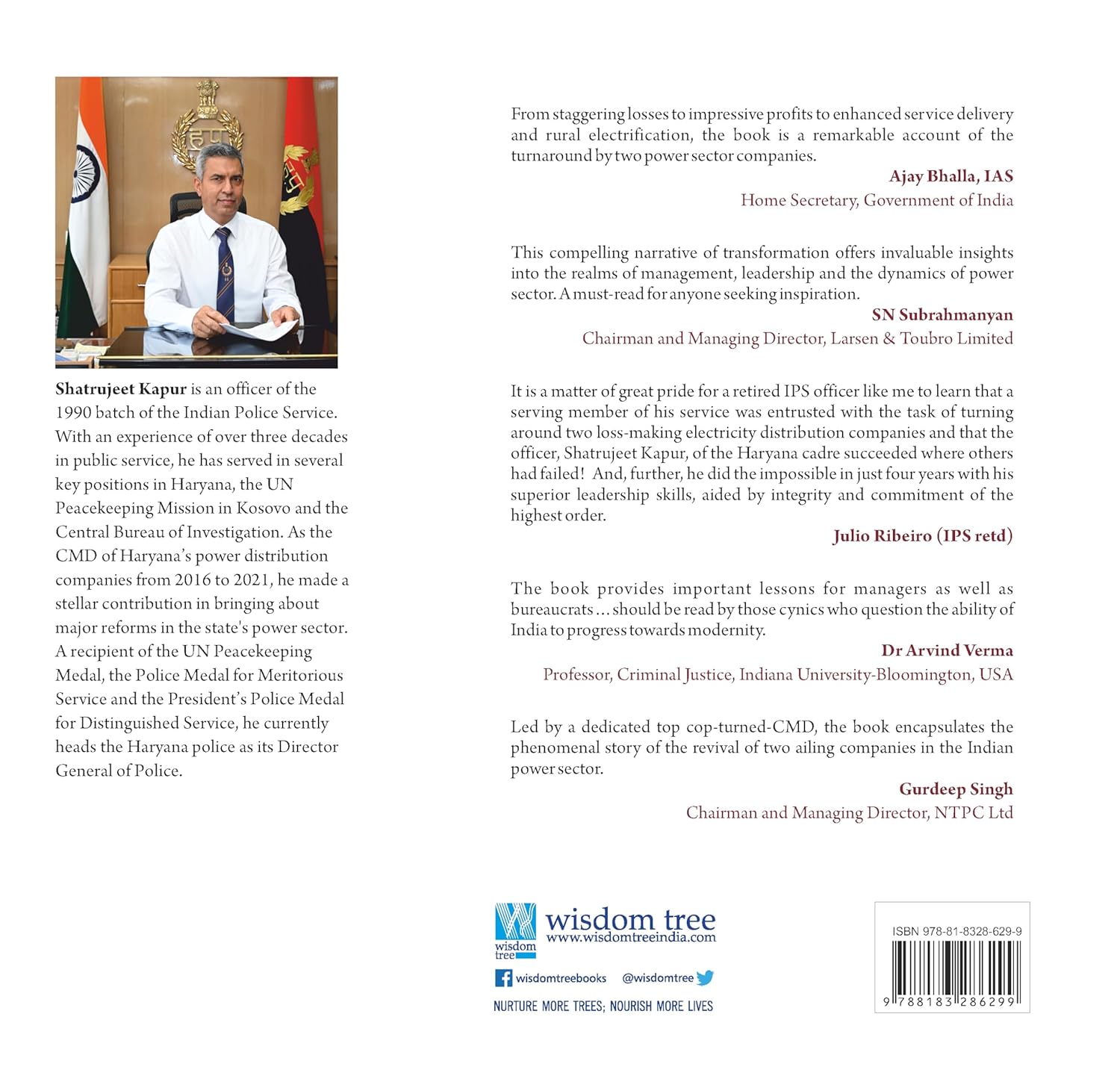
We present the story of Discom by author Shatrujeet Kapur, a 1990-batch IPS officer who made significant contributions to Haryana's power sector as CMD of the state's power distribution companies from 2016 to 2021. His reforms transformed the sector, improving efficiency and service delivery. His career includes several prestigious honours, including the UN Peacekeeping Medal, the Police Medal for Meritorious Service, and the President's Police Medal for Distinguished Service. He currently serves as Director General of Police in Haryana, continuing a legacy of dedication and excellence in public service and law enforcement.
Let's learn from the book about this shift from dismal reality to a hopeful tomorrow.
Chapter One: The Call
The first chapter opens in September 2016. While commuting to his office in Panchkula, the author received an unexpected call from the Chief Minister's office, leading to a direct conversation with the Chief Minister. The CM discussed the challenges facing the state's power utilities and expressed his wish to appoint the author as chairman of the electricity distribution companies (Discoms). The author felt honoured by the offer, seeing it as recognition of his work and ability as a career public servant. This personal acknowledgment from the head of the state government was a significant moment, underscoring the value of his dedication and expertise.
Shri Manohar Lal became the 10th Chief Minister of Haryana on October 26, 2014, the first-time MLA to hold the position. The author had no prior acquaintance with him before the election. Soon after, he was called to meet the Chief Minister in Chandigarh. The BJP, newly in power, lacked familiar faces in the bureaucracy and sought feedback to fill key positions. The author's name was shortlisted to head the state intelligence wing (CID), but he was reluctant, citing lack of experience and interest in the role. After a second meeting, impressed by the Chief Minister's simplicity and idealism, he agreed to take up the job, seeing a ray of hope in his leadership.
The new government achieved several milestones, including the successful rollout of the Beti Bachao Beti Padhao scheme. This led to the arrest of doctors involved in illegal sex determination and female foeticide, and a notable improvement in the state's gender ratio. The government also focused on power sector reforms, introducing the Mhara Gaon Jagmag Gaon scheme to upgrade rural power infrastructure, though success eluded them here. Meanwhile, the author, by then heading the state crime branch, received an offer from the Chief Minister to become chairman of the electricity distribution companies. He raised concerns that the chairman's role was non-executive and might limit his ability to deliver results. Undeterred, the Chief Minister called again the following week to press the offer further.
Rural electrification was another major focus. It is a complex task, slowed by limited amenities, low education levels, and skill shortages, and it takes time. The bigger obstacle, however, was distribution in these areas, since it involves large populations and is both labour- and land-intensive, tangled with other difficult factors. The author described this as one of the problems he uncovered from the Pandora's box he opened.
The author was eventually appointed Chairman-cum-Managing Director (CMD) of Haryana's Discoms, marking the start of a four-and-a-half-year tenure.
During this period, he achieved a complete turnaround of both utilities — unprecedented in a state long known for inefficient power supply and heavy losses. The two companies had combined accumulated losses of over ₹29,000 crore when he took over. By the end of his tenure, reforms had delivered financial gains of ₹15,966 crore.
The gains extended beyond finances and included:
- Enhanced reliability and continuity of power supply
- Better access to electricity, especially in rural areas
- An upgraded distribution network
- Improved processes and ease of doing business
- Higher consumer satisfaction
He faced resistance from vested interests profiteering at the expense of taxpayers and consumers, exposing systemic corruption at multiple levels — from procurement to power purchase contracts — that encouraged inefficiency and rent-seeking. His experience underscored the need to tackle this corruption to improve the sector's efficiency and transparency.
The Intriguing World of Power Purchase
The next chapter covers new challenges Kapur faced as CMD. Corruption in the power sector, he found, spreads like a web, and even an experienced IPS officer must stay alert to the unexpected.
In February 2018, an acquaintance visited the author at the UHBVNL office in Panchkula with alarming information about a private thermal power company. The company was allegedly inflating bills for compensation under the "Change in Law" clause in its Power Purchase Agreements (PPAs), citing domestic coal shortages.
Finding the information credible, the author launched an investigation. The company had allegedly overbilled Haryana Discoms despite receiving nearly ₹1,050 crore in payments. The Central Electricity Regulatory Commission (CERC) had directed Discoms to compensate for changes in taxes and duties on domestic and imported coal. To verify the claims, the author sent two senior officers to Kolkata and Sambalpur to gather data on coal ordered and received from Coal India Limited (CIL). Railway authorities and CIL executives were initially uncooperative, but with help from contacts in the Railways and the CBI, the team obtained the data. It revealed that the company was diverting coal meant for Haryana to its plants in Maharashtra and Rajasthan.
The company was using imported coal to supply Haryana while claiming compensation for domestic coal shortages — a pattern of inflated billing with significant financial consequences.
The investigation found that the company was inflating bills to Haryana Discoms by:
- Diverting coal intended for Haryana to plants in Maharashtra and Rajasthan
- Using imported coal to supply Haryana while claiming compensation for domestic coal shortages
These actions cost Discoms ₹273 crore. The company also failed to notify Discoms of changes in fuel supply arrangements, as required under the PPA, and its claims of domestic coal shortages were exaggerated — actual compensation due was ₹311 crore, not the ₹852 crore claimed. Armed with this evidence, the author confronted the company. After negotiations, a settlement deed was signed, recovering nearly ₹700 crore.
Haryana Discoms at a Glance
Haryana's power distribution system works as follows:
- Electricity is received at 33 kV from the state transmission utility
- Voltage is stepped down to 11 kV through 800+ substations
- Electricity travels through 11 kV feeder lines (overhead HT wires or underground cables)
- Voltage is stepped down further to 400 V through distribution transformers (DTs)
- Electricity reaches consumers via low-tension (LT) lines
Transmission and distribution systems are distinguished by voltage level:
- Distribution system: up to 33 kV
- Transmission system: 66 kV or above
A brief timeline of Haryana's electricity sector:
- 1966–1998: Haryana State Electricity Board (HSEB) handled generation, transmission, and distribution
- 1998: HSEB was split into two corporations — Haryana Vidyut Prasaran Nigam Limited (HVPNL) and Haryana Power Generation Corporation Limited (HPGCL)
- 1999: HVPNL underwent further reorganisation through a second transfer scheme
"States like Uttarakhand and Himachal Pradesh can meet much of their electricity demand through hydro power, given their geography. Haryana cannot replicate this, so strategic reforms became essential," the author explained.
UHBVNL and DHBVNL procure power through the Haryana Power Purchase Centre (HPPC) for over 76 lakh consumers. UHBVNL handles power distribution and retail supply in northern Haryana, covering districts such as Panchkula, Ambala, and Yamuna Nagar.
Consumers in Haryana are classified as:
- Domestic Service (DS): household connections
- Agricultural Pumpsets (AP): tube well connections for farmers
- Industrial: a distinct category
- Non-Domestic Service (NDS): commercial, institutional, and other connections
Within DS, NDS, and industrial categories, connections are further classified as:
- Low Tension (LT): connected load up to 50 kW
- High Tension (HT): connected load of 50 kW or above
Key figures as of March 31, 2023:
- Contracted power: 13,442.77 MW, exceeding the peak intra-day demand of 12,768 MW recorded in FY 2022-23
- Total consumers: 76.65 lakh
- Per capita electricity consumption in FY 2021-22: 2,167 kWh (above the national average of 1,161 kWh)
- Highest-ever daily supply: 263.60 million units (MU), recorded on June 28, 2022
Power reaches the Discoms' network through the state transmission utility, HVPNL.
What Ails India's Discoms
The author notes that state-owned power companies often suffer from all-round mediocrity, driven by:
- Excessive job security, leading to complacency and low motivation
- Seniority-based promotions rather than performance-based ones
- A lack of objective performance appraisals
- Few or no performance-based transfers
This breeds broader inefficiencies common across government departments and PSUs. Promotions are often shaped by political connections, personal influence, or financial considerations, while professional competence, domain expertise, and performance go undervalued.
Three key issues stand out:
- Neglected HR management:
- Limited focus on capacity building and career planning
- Technical staff often work with outdated knowledge and skills
- Few employees stay current with the latest advances and innovations
- Widespread corruption:
- Affects individuals across ranks and stakeholder groups
- Underlies most problems Discoms face
- Remains hard to address due to a lack of institutional will
- The need for capable leadership to combat mediocrity, root out corruption, and build a stronger, more efficient, and sustainable power distribution sector.
During our discussion, the author shared that one of his key reasons for writing the book was to help Discoms avoid losses caused by gaps in knowledge, skill, and exposure — gaps that keep state governments from becoming Stars, Cash Cows, or Question Marks.
The author draws on real-life cases to propose solutions in later chapters. He also carried out systemic reforms in procurement and design, describing the process as "quite lengthy and cumbersome." One of the major financial reforms under his leadership was strengthening internal audit at the Haryana Discoms.
This audit wing, headed by a chief auditor at financial advisor level, performs several key functions:
- Conducting an annual audit of works and expenditure accounts
- Performing concurrent audits of revenue and consumer accounts
- Handling special audit assignments and investigating complaints
- Coordinating with the Comptroller and Auditor General of India (C&AG) on company account audits and related matters raised before the state legislative assembly's Committee on Public Undertakings
The chief auditor reports to the board's audit committee through a defined process.
This gave the author a transparent, accurate picture of the situation, enabling him to diagnose problems correctly. By strengthening the internal audit system, he strengthened the spine of the sector.
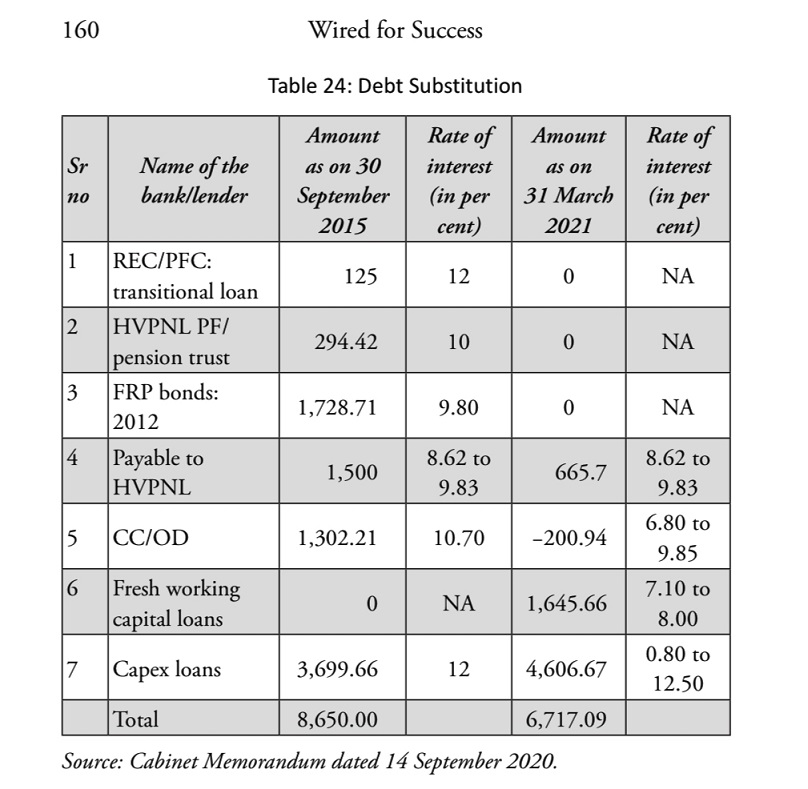 Some other financial systemic improvements introduced under his leadership include enabling bill payment through RTGS/NEFT, the Bharat Bill Payment System (BBPS), Common Service Centres (CSCs), and post offices.
Another notable change was the decision to galvanise all steel items going forward. This prevents rusting, extending the lifespan of the items while also improving their appearance.
Similarly, the design of GO switches was comprehensively improved, with changes to material, configuration, and other specifications. These improvements reduced both the frequency of breakdowns and the number of electrical accidents.
Key changes were also made to the configuration of HT and LT lines. Before 2020, different field units used different layouts for these lines. This made it necessary to formulate standardised guidelines and adopt a universal design for constructing LT, 11 kV, and 33 kV HT lines, factoring in load growth, availability of land for erecting lines (right of way, or ROW), and aesthetics. Feeder line configurations were deliberated at length and standardised for both urban and rural areas. As a result, 11-metre poles are now used for overhead power lines, except in rare cases with site constraints, where 9-metre poles are permitted. Similarly, the ACSR conductor size has been fixed at 100 sq mm, except for spur lines in rural areas, where 80 or 50 sq mm conductors are allowed. These changes ensure electrical lines have enough capacity to handle additional demand.
He added: "Customers are treated as kings. They fund every sector through their purchasing power. So it became essential for us to make the process smoother and more seamless for them, even as we carried out transformative measures internally. The results should show up in customer-satisfaction reports. Only then can this sector become sustainable and largely self-sufficient."
The author also launched consumer satisfaction initiatives aimed at connecting all unconnected households within three years. The state achieved this in five years, significantly improving system availability in urban areas, where average supply now reaches 24 hours (excluding scheduled maintenance outages).
Rural areas saw the biggest transformation:
- Distribution losses fell by 40 percentage points
- 5,270 of 7,045 villages had 24x7 power supply by March 2021
- These villages had previously received less than 12 hours of supply, with frequent interruptions
This progress was driven by several major initiatives: the Mhara Gaon Jagmag Gaon (MGJG) scheme, implemented since 2016; electricity connections for un-electrified Dhanis (small clusters of houses outside village boundaries); and a 2017 policy decision to supply electricity from AP feeders. Together, these efforts improved power supply quality, expanded electricity access, boosted consumer satisfaction, reduced distribution losses, increased supply hours, and electrified previously unconnected households and Dhanis.
Spanning 304 pages, the book captures the author's journey with Discom, offering detailed, valuable lessons in corporate leadership and power sector reform, relevant to other states as well. It is essential reading for managers, policymakers, and leaders in developing economies worldwide.
How did the author accomplish so much during his tenure? Much of it, it seems, traces back to the motivation instilled by his father, to whom the book is dedicated, who always pushed him to dream big. That drive helped make these landmark reforms possible. This is a valuable handbook on Discoms, covering the subject in depth across 24 chapters grounded in practical scenarios and real experience. A must read!
Book Critic & Review Writing by Smruti Sweta Samantray