
Chandigarh requires seamless coordination with both neighbouring police forces and other partner agencies. Modern systems such as CenCOPS, adaptive traffic control and AI-enabled surveillance have strengthened our investigative and enforcement capabilities. But this year has reinforced one central lesson: technology is an enabler; public trust is the foundation of effective policing.
Home
chevron_right
Official File Se
chevron_right
'Technology is an Enabler, Public Trust Is The Foundation Of Effective Policing': Chandigarh DGP Sagar Preet Hooda IPS
Chandigarh DGP Sagar Preet Hooda IPS.
'Technology is an Enabler, Public Trust Is The Foundation Of Effective Policing': Chandigarh DGP Sagar Preet Hooda IPS
Verbatim Transcript
Witness In The Corridors:
#Union MHA
#Administrator Chandigarh
#Chandigarh Police
#DGP Sagar Preet Hooda
1-Over the past year, how has Chandigarh Police modernised its operational infrastructure, particularly in digital forensics, surveillance systems and the command-and-control centre?
Sagar Preet Hooda IPS:
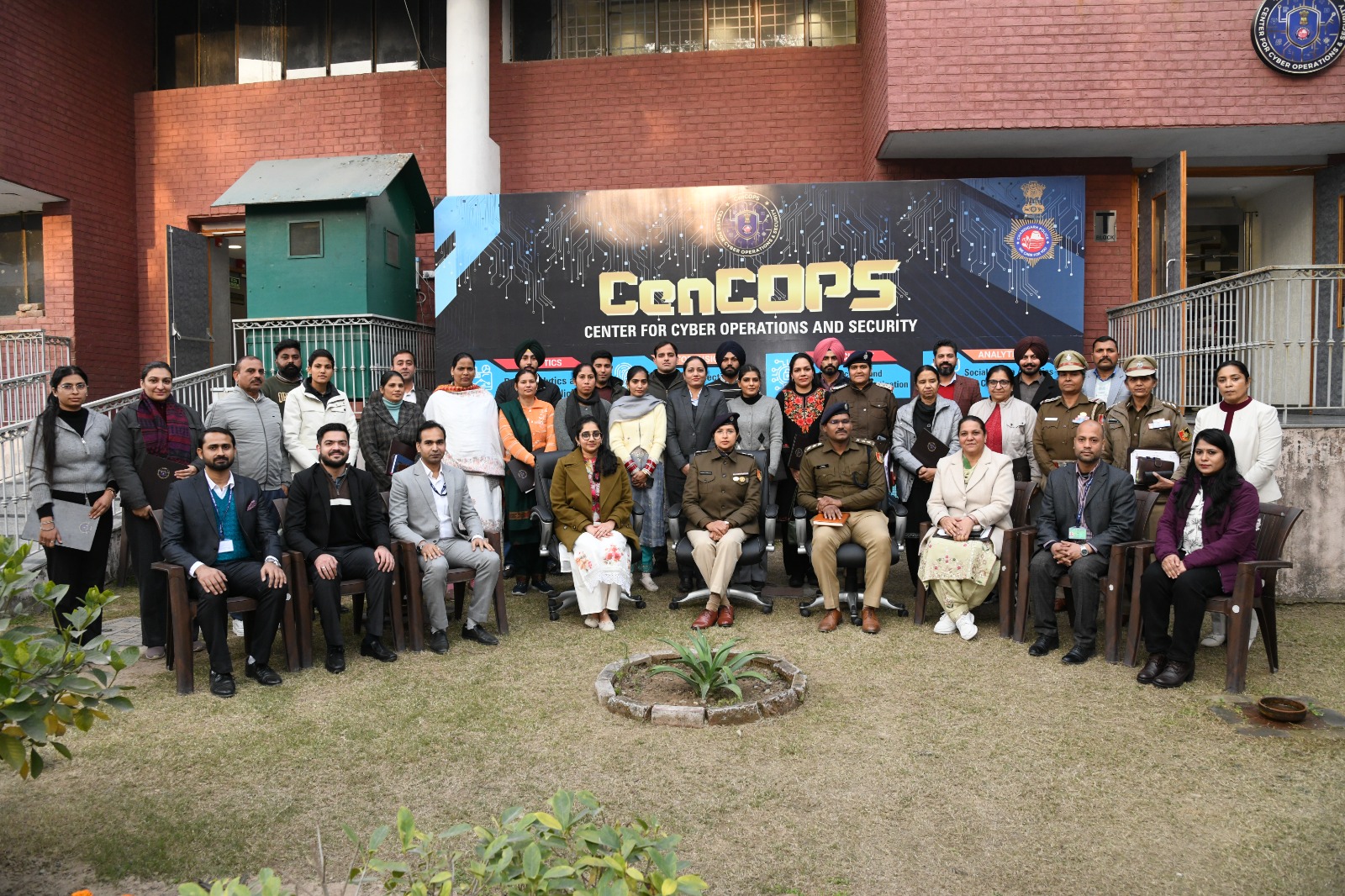
Chandigarh Police has strengthened its technological capabilities through the Centre for Cyber Operations and Security (CenCOPS), the first integrated facility of its kind in Northern India.
Established in collaboration with DRDO in December 2023, CenCOPS houses a state-of-the-art digital forensics laboratory. It supports computer and disk forensics, mobile-device extraction, GPS and vehicle forensics, audio and multimedia analysis, drone/UAV forensics, password recovery, network forensics, and data and email recovery. By bringing these capabilities in-house, we have reduced our dependence on external laboratories and made investigations faster and more efficient.
The centre also integrates social-media monitoring, Open-Source Intelligence (OSINT) and AI-enabled sentiment analysis to identify unlawful or objectionable online content and support intelligence-led policing. In 2026, CenCOPS examined more than 700 devices, including 300 mobile phones linked to cyber-slavery cases. It is now proposed to be developed as a National Cyber Commando Training Hub under I4C-JCCT5.
Witness In The Corridors:
2-Cybercrime and online fraud have grown significantly across India. What is Chandigarh Police's strategy to tackle them, including training, inter-agency coordination and citizen awareness?
Sagar Preet Hooda IPS:
Our strategy rests on three pillars: skilled investigators, close institutional coordination and informed citizens. Capacity building: CenCOPS has trained more than 1,300 personnel from Chandigarh Police, state police forces and central agencies in digital forensics, malware analysis, OSINT, and investigation techniques relating to IoT devices, drones, the dark web and encrypted VoIP. Coordination and response: We work closely with I4C, CERT-In, intelligence agencies, banks and other financial institutions, telecom service providers and technology platforms to freeze fraudulent accounts, preserve digital evidence and identify cybercrime networks.
A dedicated 1930 Cyber Helpline Control Room handles cyber-fraud calls. Cyber Desks function in every police station, while the Women Police Station has a specialised desk for online crimes against women and children. The automated e-Zero FIR mechanism is fully operational for NCRP complaints involving losses above Rs 1 lakh.
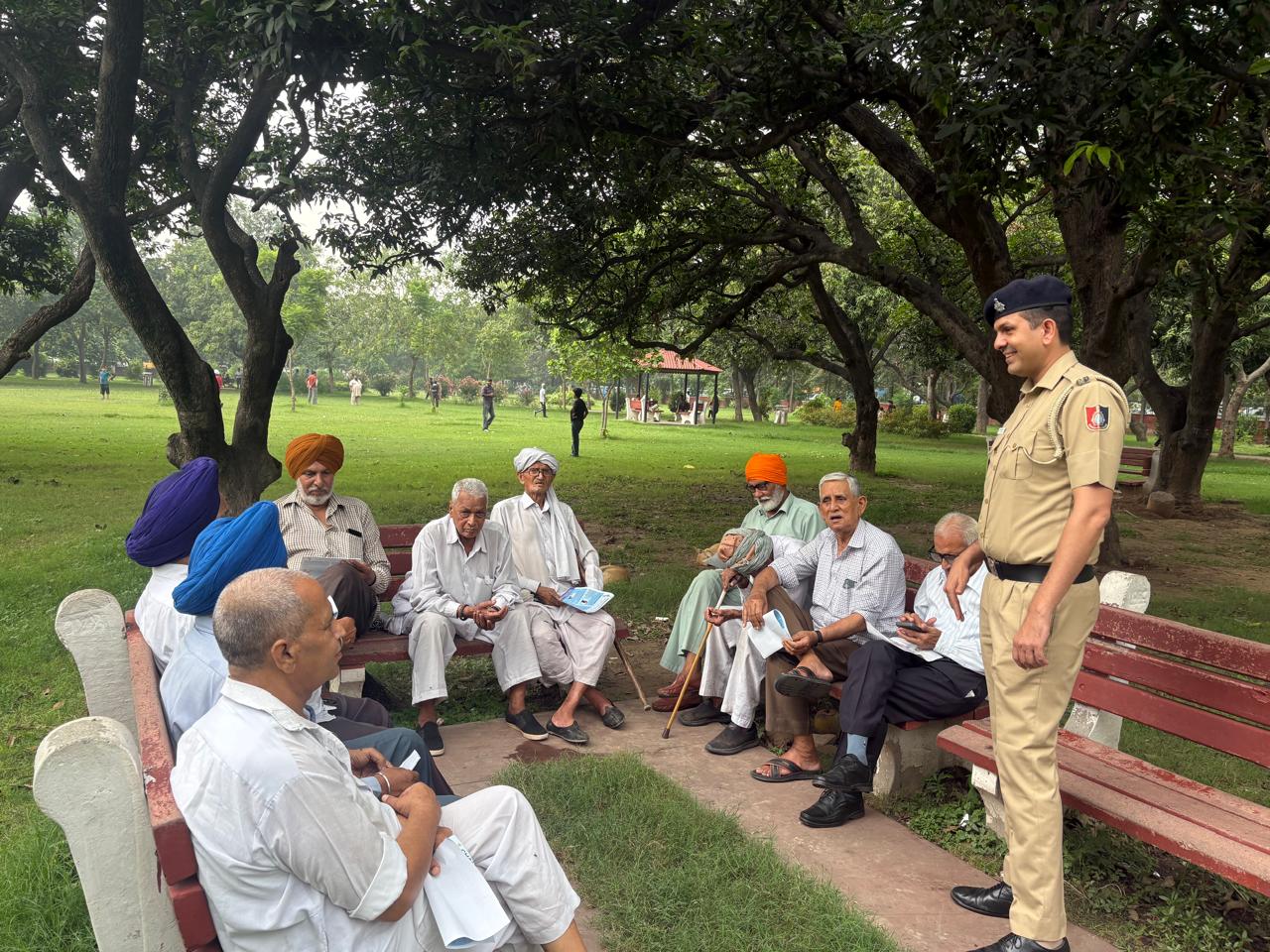
Citizen awareness: A year-round cyber-safety calendar guides outreach through schools and colleges, RWAs and MWAs, newspapers, cinema halls, FM radio, official social-media channels and cyber kiosks at high-footfall locations. Door-to-door campaigns and sessions in parks are used to reach senior citizens. Since 2021, more than 1,200 students have also been trained under the Cyber Swachhata Mission. These initiatives focus on digital-arrest, investment, UPI/OTP and impersonation scams, online harassment, safe digital practices and prompt reporting through 1930, the NCRP portal, 112 and e-FIR.
Witness In The Corridors :
3-Community-policing models are gaining traction nationally. How is Chandigarh Police strengthening its relationship with communities, particularly in high-density areas?
Sagar Preet Hooda IPS:
For us, community policing means being visible, accessible and responsive. Through SWAYAM, we provide women and girls with self-defence training and safety awareness; 56 camps in 2026 reached 6,545 participants. Our anti-drug outreach included 186 camps attended by 7,572 young people. Four editions of the Gully Cricket Tournament under the theme 'Balla Ghumao, Nasha Bhagao' have engaged thousands of students and youth since 2023.
The same approach guides our work with vulnerable groups. In 2026, police personnel made more than 6,000 home visits to check on senior citizens. We conducted 167 programmes on women and child safety for 5,952 participants, and 325 cyber-awareness camps attended by approximately 15,000 citizens.
Every Saturday, SAMVEDNA camps are held at all police stations to resolve public grievances in a transparent and people-friendly manner. Regular meetings with RWAs and MWAs help us identify local concerns and jointly improve neighbourhood security; 49 such meetings in 2026 involved 859 members.
Witness In The Corridors :
4-Chandigarh's traffic density has grown considerably. How is Chandigarh Police evolving its traffic-management approach?
Sagar Preet Hooda IPS:
Chandigarh has about 1.37 million registered vehicles for a population of 1.25 million, giving it one of India's highest per-capita vehicle densities. Annual registration of private vehicles has risen from about 36,800 in 2021 to more than 53,000 in recent years; cars and two-wheelers account for nearly 94 per cent of new registrations.
To manage this pressure, we have adopted a technology-led, data-driven approach. Under the Smart City initiative, the Adaptive Traffic Control System adjusts signal timings in real time to reduce congestion and improve movement along major corridors. Red-Light Violation Detection, Over-Speed Violation Detection and Automatic Number Plate Recognition systems, supported by high-resolution CCTV cameras, enable round-the-clock monitoring and objective, transparent enforcement at intersections and key entry and exit points.
Technology is complemented by field deployment and road engineering. Accident-prone black spots are identified through data and addressed jointly with stakeholder departments. Peak-hour deployment is regularly reviewed, while awareness campaigns and real-time social-media advisories help citizens plan safer and smoother journeys. Together, these measures improve compliance, reduce manual intervention and make traffic management more responsive.
Witness In The Corridors:
5-What emerging patterns have you observed in organised crime, drug trafficking and smuggling in the region? Chandigarh Police has also started community and youth-engagement initiatives. How successful have they been?
Sagar Preet Hooda IPS:
Organised crime and drug-trafficking networks are increasingly using end-to-end encrypted applications such as Signal, Zangi, Telegram, WhatsApp and Snapchat to conceal communications. To avoid banking trails and face-to-face contact, they use 'pick-and-drop' arrangements at pre-decided locations for cash, weapons and vehicles. Illicit funds are also routed through merchant or trade accounts to give them an appearance of legitimacy.
Another emerging pattern is the use of locations just beyond Chandigarh's borders. Traffickers may deliver narcotics 500-700 metres outside the city, from where local peddlers collect and distribute them. We have responded through intelligence-led operations and close coordination with neighbouring police forces, resulting in the apprehension of several such traffickers.
Enforcement alone, however, cannot provide a lasting solution. Dedicated Drug Awareness Teams work in schools, colleges and vulnerable settlements. In 2026, 70 programmes in educational institutions reached 14,525 students. In partnership with SPYM, 300 students were trained as 'Anti-Drug Yodhas' under the Nasha Mukt Bharat Abhiyan to promote drug-free campuses.
Sports have proved to be a powerful means of positive engagement. The fourth Gully Cricket Tournament brought together 288 teams and more than 3,450 young people. Citizens are also encouraged to share drug-related information through the MANAS Helpline (1933) or the Chandigarh Police Drug Helpline (7087239010).

Witness In The Corridors:
6-Women's safety remains a major concern, including in NCRB reports. Beyond reactive measures, what training, preventive programmes and structural changes has the force implemented in the past year?
Sagar Preet Hooda :
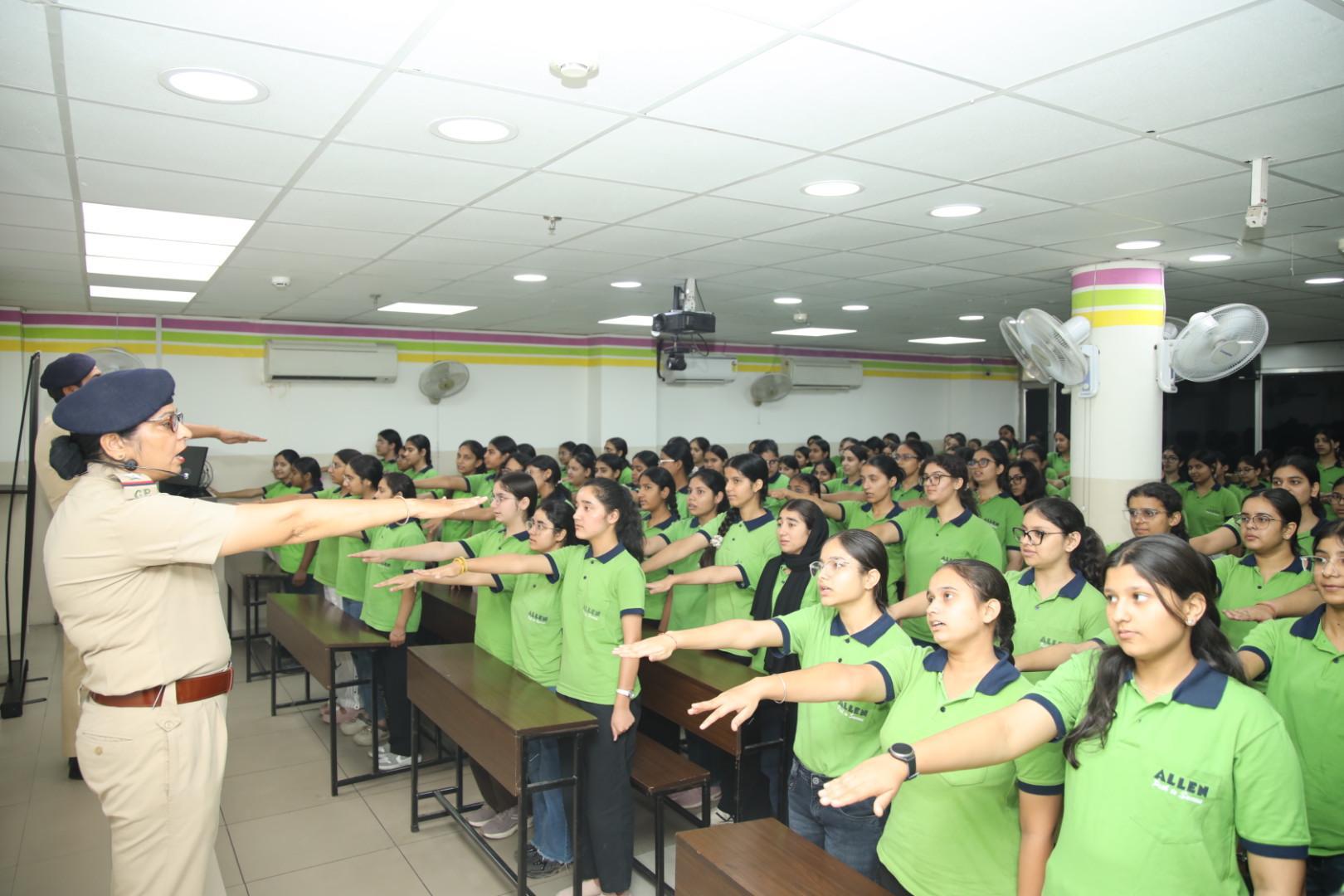
Women's safety is a core priority for Chandigarh Police. Our approach combines empowerment, prevention, accessible support and specialised institutional mechanisms. Training and empowerment: Under SWAYAM, women and girls in schools, colleges and vulnerable communities receive self-defence training in situational awareness, escape techniques, response to stalking and assault, and emergency action. Between September and December 2025, 100 camps were held across 76 schools and 21 colleges, reaching 21,308 children.
Awareness and prevention: Under the Cyber Swachhata Mission, 228 sessions were held in 2025 on cyberstalking, bullying, sextortion, fake profiles, payment fraud, safe online behaviour and reporting. Separate outreach in schools, colleges, markets, RWAs and public spaces covers legal rights, domestic violence, dowry prohibition, sexual harassment and human trafficking. Since April 2026, messages on trafficking, domestic violence, women's safety and helplines have also been displayed at about 40 traffic signals.
Institutional coordination: A State-level conference on 28 April 2026 brought together police and judicial officers, child-protection agencies, NGOs and experts to strengthen the response to human trafficking, particularly cases involving women and children. The Anti-Human Trafficking Unit is also working to establish clubs in 15 colleges so that students can become partners in preventing trafficking and cyber-enabled exploitation.
Accessible services: Through ERSS-112, a free late-night pick-and-drop service is offered to stranded women on special occasions; 69 women used it in 2025. A dedicated Lady Squad, supported by 16 vehicles, patrols sensitive areas and strengthens night-time response. The 24x7 women's helplines - 181, 1091 and 0172-2741174 - received 2,103 calls in 2025 and 1,455 calls in 2026.
Victim support: Counselling and Mediation Centres at the District Courts, Sector 43, help resolve matrimonial disputes through counselling and mediation. The Rape Crisis Intervention Centre at the Women and Child Support Unit provides survivors with counselling, legal aid, medical support and rehabilitation; 44 people received counselling during 2025-26.
Witness In The Corridors:
7-As you complete one year as head of Chandigarh Police, what has the experience taught you about leading a force in a Union Territory, and what is the one priority you are most determined to advance?
Sagar Preet Hooda:
Leading Chandigarh Police has been both a privilege and a profound learning experience. As the capital of Punjab and Haryana, Chandigarh requires seamless coordination with both neighbouring police forces and other partner agencies. Modern systems such as CenCOPS, adaptive traffic control and AI-enabled surveillance have strengthened our investigative and enforcement capabilities. But this year has reinforced one central lesson: technology is an enabler; public trust is the foundation of effective policing.
Our interactions with citizens - through SAMVEDNA grievance-redressal camps, anti-drug initiatives, cyber-safety campaigns and women's empowerment programmes - remind us that policing is not only about enforcement. It is equally about empathy, accessibility, education and partnership.
My foremost priority is therefore to institutionalise technology-enabled, transparent and citizen-centric policing, with an intensified focus on organised crime and cybercrime. We will continue to strengthen digital forensics, intelligence-led operations and inter-agency coordination against criminal syndicates and cyber-fraud networks. The objective is clear: safer streets and cyberspace, empowered communities and sustained public confidence - the true measure of a police force's success.