
Exclusive: How Govind Mohan Built MHA's New Security Template And Foiled Repeat of July 20
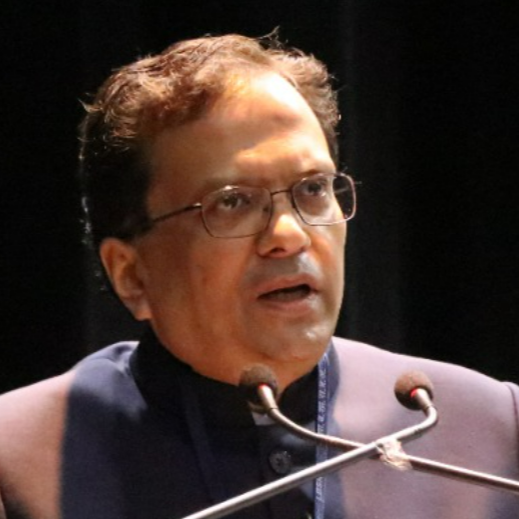
The successful containment of a potential security collapse on October 10 and, more importantly, the thwarting of any attempt to replay the chaos of July 20 was not the work of a single agency acting alone. According to top sources, it was a collective security vision shaped under the leadership of Union Home Secretary Govind Mohan.
While regular security review meetings at the MHA continued as usual and were duly reported, something more significant was unfolding behind the scenes: in close coordination with security agencies, the ministry quietly reworked its entire approach to tackling anarchic elements bent on destabilization and psychological warfare, a top source in Intelligence establihsment said.
The Core Strategy
Top sources describe it as a “collective pre-emptive security strategy” designed specifically to choke off any attempt by disruptive groups to mobilize and synchronize their numbers before they could gather momentum.
Govind Mohan's thinking was unambiguous: no single institution acting in isolation can guarantee stability. Only a collective response generates the kind of security multiplier effect capable of countering coordinated destabilization attempts.
To make this work, a continuous interface was established among the DGPs of various states, with a focus on Maharashtra, among them,with real-time coordination replacing the old siloed approach. The underlying logic was simple but sharp: squeeze the ability of groups to amass numbers early, so the psychological advantage of "outnumbering" the police or seizing the streets never materializes in the first place, a top source said. The failure in 20th July was clear: no deterrence mechanism to deter the "amassing effect," and this time a countermechanism was put in place to deter it a top source added. Establishing detention centers specifically catered to squeezing strategy, even if some groups manage to hit the street, played a role in further clamping down on the destabilizing attempt, a top source in MHA said.
A New Template for the Future
Top Sources suggest this pre-emptive model has now effectively become a template for handling similar threats going forward because it strikes directly at the will and capacity of any group to mobilize and swell its ranks, rather than just managing the fallout once a crowd has already gathered. To be fair, the approach isn't without friction. Public inconvenience and criticism over an "aggressive" security posture are real concerns. But as sources point out, law and order cannot be bargained away in the face of a credible destabilization threat to the capital.
Just before October 10, Home Secretary Govind Mohan chaired two critical meetings, driving home one core principle: deterrence through pre-emption, backed by synchronized inter-state police action. This deterrence mechanism succeeded for two key reasons: First No single force was overburdened the load was distributed across states through coordinated action. Second, intelligence flowed freely and in real time , a stark contrast to July, when Delhi Police found itself overwhelmed, working with degraded and outdated intelligence inputs, A top source said
In July, the lack of clear operational guidance and strategic coordination was glaring. This time, the MHA stepped in to bridge exactly that gap, turning a reactive scramble into a coordinated, pre-emptive national security response.