
Exclusive: The DG Who Stopped Whispering: Kapoor's Loud Message to China
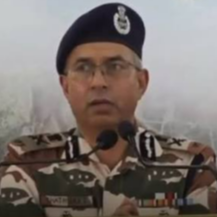
When ITBP Director General Shatrujeet Kapoor stood before his Himveers in Alwar on October 22 and said, in effect, “yes, we are still face-to-face with the Chinese in Arunachal Pradesh, and our boys are handling it” For the first time, India's own border guarding force officially confirmed what locals in Arunachal Pradesh had been reporting since July. Kapoor didn't mince words. He said the face-offs were real, ongoing, and that ITBP's Shaurya Commando teams had "done a tremendous job" in these confrontations. However, reading Kapoor's statement purely through a political lens misses the far more important strategic signal buried in it.
Dissuasive Deterrence
Strip away the political noise, and what Kapoor actually did fits a textbook concept: deterrence by denial, sometimes called dissuasive deterrence. “The logic is simple you don't just threaten retaliation; you convince the adversary, in advance, that any attempt to alter the status quo will simply fail to achieve its objective. You deny them the win before they even try”, a top source in security establihsment added. By publicly confirming the face-offs, naming the units involved, and detailing their performance, Kapoor sends a layered message to Beijing, top sources in the security establishment said.
The strategy seeks to shape the adversary's thinking by convincing it that any aggressive action will fail to achieve its operational or strategic objectives in the short term, signaling to China that it cannot alter the status quo. It also demonstrates a credible defensive capability: “You don't just say you can hold the line; you show the adversary that we are hardening,” a top source added.
Understanding China's "Talk-Talk, Fight-Fight" Playbook
Critics who dismiss Kapoor's statement as alarmist or politically inconvenient are, frankly, underestimating how China actually operates at contested borders. Beijing's approach follows a long, consistent pattern: negotiate loudly at the diplomatic table while quietly altering facts on the ground,probing, nibbling, creeping,to negotiate from a position of strength rather than parity.
This isn't new, and it isn't India-specific. During the Cold War, China revived border tensions with the Soviet Union at moments of ideological and geopolitical friction, using localized military pressure as leverage in a broader strategic contest ; a classic Chinese strategy of coercion through calibrated friction, designed to tire out the other side into one-sided concessions rather than genuine resolution and to contain India's rising clout in the global order.
But the more durable story is this: India's border guarding leadership is choosing to speak in the language China itself understands Kapoor's statement, read in that light, isn't a controversy. It's a message, deliberately sent, that the status quo at the LAC won't move through stealth, coercion, or patience-testing, a top source in security establishment said.